Walk into a tackle shop and the lure wall is a mess of sizes, from 7cm minnow-sized shads to 30cm monsters that look like something you’d put on a boat. For pike, size is usually the first decision, and it’s easier to get right than the colour choice that gets all the attention.
I’d treat the sizes below as starting points, not rules. A fish that ignores a 20cm lure will sometimes take a 10cm one, and the opposite happens too.
Some product links in this post are affiliate links to Total Fishing Tackle and Fishing Tackle & Bait. If you buy through one we may earn a commission at no extra cost to you. How that works.
What size does a pike want?
Pike eat everything from fry to other predators and large coarse fish, so there isn’t one right answer. Fish hunting small prey fish in September are often chasing something far smaller than a fish in November that wants a single large meal. Neither will always turn down the other size.
So the question isn’t “what’s the biggest lure I can cast?” but “what’s the pike in front of me eating, and how active is it?”
The sizes, in plain terms
| Size | Typical use | Examples |
|---|---|---|
| 7-10cm (3-4in) | Small canals, clear water, pressured fish, cold days, perch and jack pike | Fox Rage Slick Shad 9cm |
| 12-16cm (5-6in) | The all-rounder. Rivers, canals and stillwaters through most of the year | Fox Rage Pro Shad Jointed 14cm, Fox Rage Zander Pro Shad 16cm |
| 17-23cm (7-9in) | Bigger fish and bigger water. Autumn and early winter | Fox Rage Super Slick Shad 18cm, Savage Gear Line Thru Perch 23cm |
| 25-30cm+ (10-12in) | Specialist. Big-fish waters, heavy rods, long sessions with few bites | Savage Gear Line Thru Trout 25cm |

Small lures: 7 to 10cm
Don’t write these off as perch lures. On a canal in clear water, or on a river that’s had a lot of anglers walk past, a 9cm shad is often what gets a follower to commit. They’re also less of a mouthful for jack pike, which is useful when you’re fishing for numbers. On the downside, they offer less presence in coloured water, and a big pike may not bother with a snack.
The all-rounder: 12 to 16cm
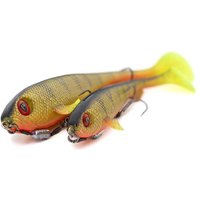
If I could only carry one size, it’d be here. A 14cm shad is big enough to attract pike properly, small enough to cast comfortably on a medium rod, and available in a huge range of patterns. The Fox Rage Pro Shad Jointed 14cm sits right in this range and is sold ready-rigged. For a slightly longer profile, the 16cm Zander Pro Shad is another sensible pick.
Big baits: 17 to 23cm
Moving up in size makes sense when you’re fishing for bigger fish, or in open water where you need a larger profile to draw attention. The trade-off is a lot more weight and drag. A lure over 100g is hard work on a light rod, and you’ll tire your wrist faster than you expect. Make sure your rod is rated for it. Our lure fishing for pike guide covers the rod range, and a later post in this series goes into rods and reels in detail.
Giant lures: 25cm and over
These are a different type of fishing. Savage Gear’s line-thru trout range, for example, runs from 15cm at around 35g up to 30cm at about 290g, and the big ones need a stiff rod and a strong cast to throw. They work through slow, deliberate retrieves, and plenty of sessions end without a single follow. They can be worth it on waters known for big fish where an occasional 20lb pike makes the long hours worth it. We’ll go through the line-thru type in a later post.
How to choose on the day
Four things push my choice up or down:
- Water clarity: clear water favours smaller, more natural lures. Coloured water allows bigger lures with more flash or vibration.
- Water temperature: cold water slows pike, so smaller lures worked slowly are often more effective than large lures worked fast.
- Prey size: if you can see fry or small roach, match them. If you see nothing, the 14cm shad is a good starting point.
- Your rod and reel: a lure should sit within the rod’s rated casting weight. Over-gunning a light rod is a recipe for broken tips.
If you’re unsure, bring three: a 9cm, a 14cm and an 18cm. You’ll learn more from changing size than from changing colour.
Gear that fits this
For anyone buying with this in mind, a few sensible picks.
Baits and bait gear: Fox Rage Deadbait Kebab Kit, Fox Rage Deadbait Pencil float and Holy Mackerel Natural Predator oil.
For reels, Fox Rage Prism X Baitcast, Penn Battle IV 3000 and Daiwa Ninja 3000.
Rods that suit: Fox Rage Prism X Pike Cast, Fox Rage Warrior Jerk Rod and Fox Rage Prism X Lure and Shad.

Questions anglers ask
What is the best lure size for pike?
For general UK pike fishing, 12 to 16cm is a good starting range. Go smaller (7 to 10cm) in clear, pressured or cold water, and bigger (17cm and up) in open water or when targeting larger fish.
Do bigger lures catch bigger pike?
They can, but they also get fewer bites. A big lure filters out small fish, but it doesn’t guarantee a large one will take it. It works best on waters with a known population of big fish.
What weight should a pike lure be?
It depends on the lure type and the rod. Many shads weigh between 15 and 60g, while the largest line-thru lures can top 200g. Always stay inside the casting range printed on your rod blank.

Rob Hadley grew up fishing the rivers and drains of the Norfolk Broads, and it was inevitable that pike would become his species of choice. He’s been targeting predators seriously for over 20 years – starting on dead baits, moving through live bait rigs, and eventually landing on lure fishing as his preferred method about eight years ago.
These days he fishes the Broads through winter, travels to Chew Valley Lake each spring for its outsized fish, and spends the warmer months working soft plastics on rivers across the East Midlands for perch and zander. He’s had pike to 31lb and perch to 3lb 9oz, and reckons both records are beatable on the right day with the right set-up.
At The River Bend, Rob writes the predator species guides, lure fishing technique articles, and most of the winter fishing content.
Covers: Pike, perch, zander, lure fishing, winter fishing, predator rigs