The improved clinch knot is the most widely used hook knot in UK coarse fishing. It works in monofilament and fluorocarbon from 2lb to 20lb, it is fast to tie once learned, and it is reliable enough that most match anglers tie nothing else for attaching hooks to hook lengths. If you learn one hook knot, make it this one.
This guide covers how to tie it correctly in under a minute, what “improved” actually means versus the standard clinch, when to use it and when not to, and the three mistakes that cause it to fail.
What You Need
- A hook (any pattern with an eye – this knot does not work on spade end hooks)
- Monofilament or fluorocarbon line
- Nail clippers or scissors to trim the tag end
That is it. No tools required to tie the knot itself.
How to Tie the Improved Clinch Knot – Step by Step
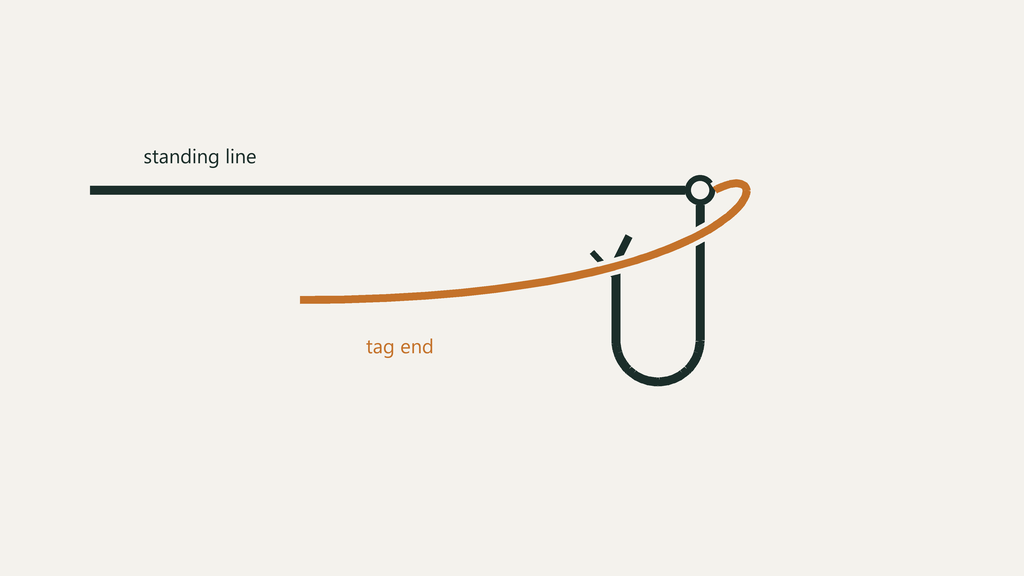
Step 1. Thread 5-6 inches of line through the hook eye from the point side (towards the hook point, not away from it). The exact direction matters less than consistency – but threading towards the point is the traditional approach for most hook patterns.
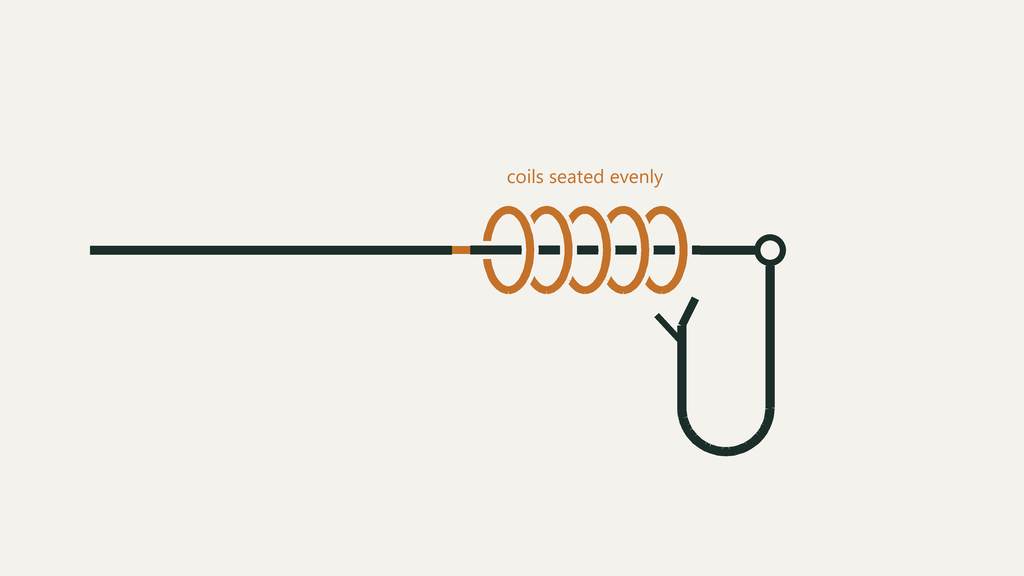
Step 2. Hold the hook between your thumb and forefinger, with the tag end pointing away from you. Wrap the tag end around the standing line (the main line going to the reel) five or six times. Wrap away from the hook eye, not towards it. Five wraps is standard for lines above 8lb; six wraps for lighter lines under 6lb where the smaller diameter needs more friction to grip.
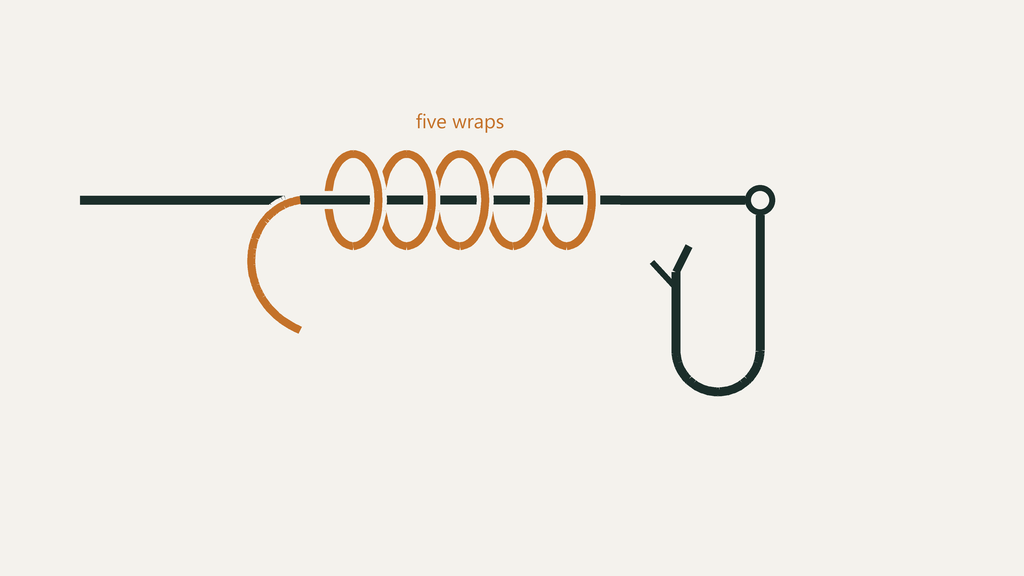
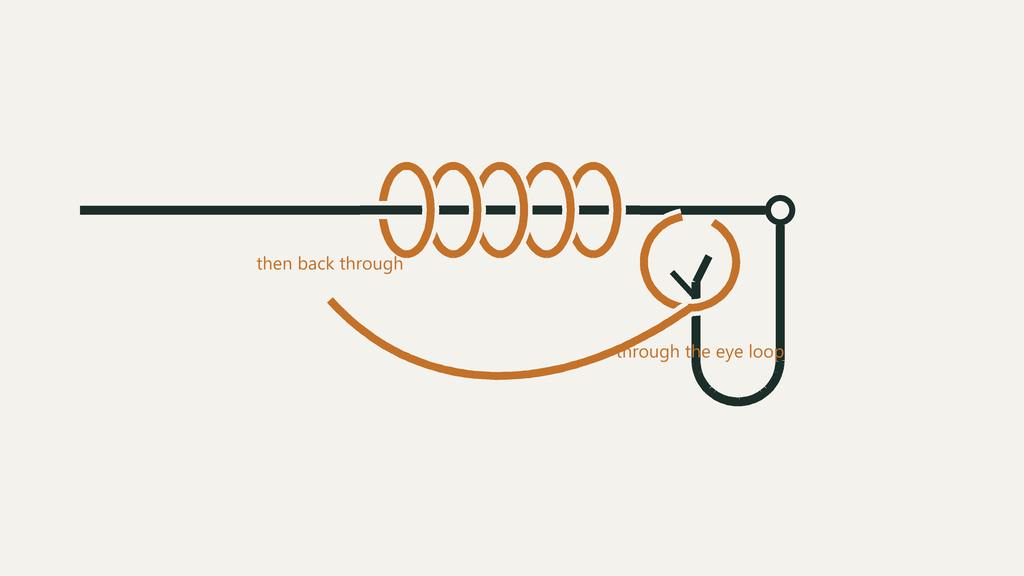
Step 3. After completing the wraps, bring the tag end back towards the hook eye. Thread it through the small loop that has formed between the eye and the first wrap – the loop closest to the hook.
Step 4. This is the “improved” step that distinguishes this from the standard clinch. After threading through the small loop near the eye, bring the tag end back through the large loop you have just created between the wraps and the tag end. This second pass through is what locks the knot and improves the breaking strength by around 5-10% compared to the standard clinch.
Step 5. Moisten the knot with saliva or water. This is not optional – dry friction as you pull the knot tight generates heat that weakens nylon and fluorocarbon. Moisten, then pull the standing line steadily away from the hook while holding the tag end, drawing the wraps down towards the eye until they seat tight.
Step 6. Pull firmly to test the knot, then trim the tag end to within 2mm of the knot. Any longer risks the tag end catching weed or debris; any closer risks the knot slipping.
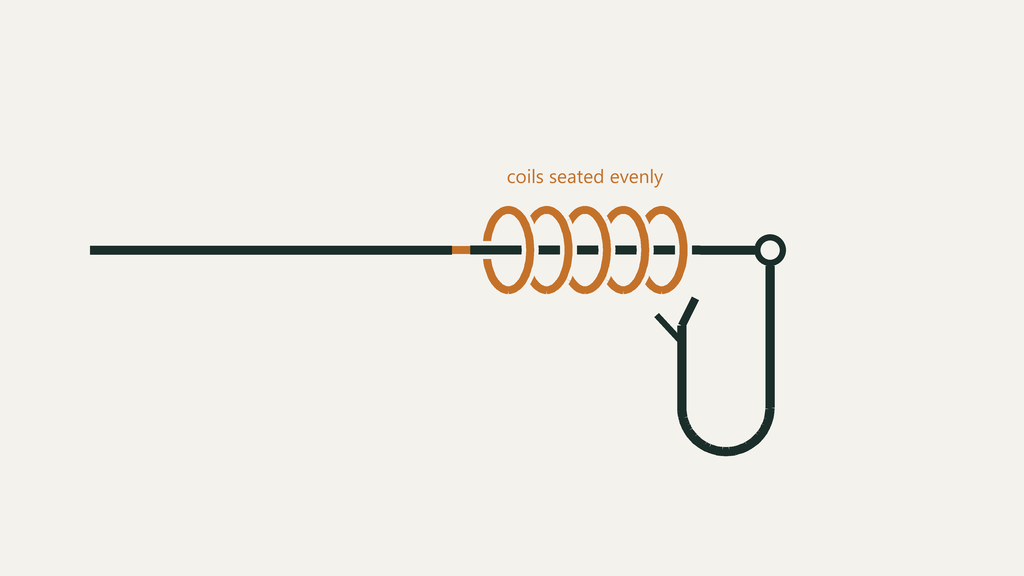
What the Improved Clinch Retains
A well-tied improved clinch knot in quality monofilament or fluorocarbon retains approximately 80-85% of the line’s rated breaking strain. In 6lb line, that means the knot will hold until around 4.8-5.1lb of direct pull. This is enough for all practical UK coarse fishing purposes when the knot is tied correctly.
Knot strength drops significantly if: – The knot is pulled tight dry – The wraps are uneven or overlapping rather than neat and parallel – The line has been weakened by UV or kinking before tying – The tag end is not threaded through both loops in the “improved” step
A properly tied improved clinch outlasts the hook in most fishing situations.
When to Use the Improved Clinch Knot
Float fishing for roach, bream, and tench. The standard application. Attaches eyed hooks (sizes 14-8) to monofilament or fluorocarbon hook lengths. Fast to tie at the waterside in any conditions.
Feeder fishing. Attaching hooks to hook length material on swimfeeder or method feeder setups. Where anglers use pre-tied hook lengths (commercial or tied in advance), the improved clinch is usually what you replace them with at the waterside.
Swivel attachment. Attaching a swivel to mainline on a ledger or running rig. The same knot works identically on a swivel ring as on a hook eye.
Barbel and chub fishing with bait. Where a running ledger with an eyed hook on mono or fluorocarbon hook length is the setup, the improved clinch is the hook connection for most anglers.
When Not to Use the Improved Clinch Knot
On braid. The improved clinch does not grip reliably on braid mainline. Braid’s slick, low-stretch surface allows the wraps to slip under load. Use a Palomar knot for braid-to-hook or braid-to-swivel connections.
On drop shot hooks. The improved clinch does not set the hook at 90 degrees to the line, which is essential for drop shot fishing. Use the Palomar knot for drop shot only.
On spade end hooks. The improved clinch requires an eye to thread through. Spade end hooks use a whipping knot instead.
On very heavy line above 25-30lb. The stiffness of heavy mono makes it difficult to get neat, tight wraps. A Uni knot or loop-to-loop connection is more practical for heavy leaders.
The Three Most Common Mistakes
Not moistening before pulling tight. This is the number one cause of improved clinch knot failures. Dry friction heats the line and weakens the nylon at the point of highest stress – inside the coils. Moisten every time, without exception.
Too few wraps. Three or four wraps feels quicker and still looks like a clinch knot, but the reduced friction means the knot seats differently and holds less reliably. Five wraps minimum for standard lines. Six for lighter lines under 6lb.
Missing the “improved” step. Threading through the small loop but not the large loop produces a standard clinch – still functional but weaker. The double-pass through both loops is what locks the knot.
Spade End Hooks vs Eyed Hooks
The improved clinch only works on eyed hooks. Much UK match fishing and traditional float fishing uses spade end hooks (a hook with a flattened end rather than an eye), which require a whipping knot tied by hand or using a hook tyer. If you are fishing with spade end hooks, the improved clinch is not the right knot.
For general fishing with eyed hooks in sizes 6-18, the improved clinch is usually the fastest and most reliable option.
Frequently Asked Questions
How many turns for an improved clinch knot?
Five turns (wraps around the standing line) is standard for monofilament and fluorocarbon lines between 6lb and 20lb. Use six turns for lines under 6lb where the smaller diameter benefits from additional friction. More than six turns does not improve the knot and makes it harder to seat neatly.
What is the difference between a clinch knot and an improved clinch knot?
The standard clinch knot threads the tag end through the small loop near the hook eye and stops there. The improved clinch takes the tag end one step further – back through the large loop created between the wraps and the tag end. This second pass locks the coils in place and improves breaking strength by approximately 5-10%. Always use the improved version.
Is the improved clinch knot good for fluorocarbon?
Yes. The improved clinch knot works well in fluorocarbon hook lengths, which is the most common application in UK coarse fishing. Fluorocarbon is stiffer than monofilament, so take care to seat the wraps neatly rather than letting them overlap. Moisten thoroughly before pulling tight – fluorocarbon generates slightly more heat under dry friction than nylon.
Can I use the improved clinch knot on braid?
No. The improved clinch does not grip reliably on braid. The slick, parallel-fibre surface of braid allows the wraps to slip under load. Use the Palomar knot or a Uni knot for braid connections. See our Palomar knot guide for step-by-step instructions.
What breaking strength does an improved clinch knot achieve?
A correctly tied improved clinch knot in quality monofilament or fluorocarbon retains approximately 80-85% of the line’s rated breaking strain. The main factors that reduce this: tying dry, uneven wraps, or missing the second pass through the large loop. Tying correctly and moistening before pulling brings results close to the upper end of this range.