Grayling (Thymallus thymallus) occupy a unique position in UK angling. They are a salmonid – related to trout and salmon, sharing the same clean, cold, fast-running rivers – but they are legally classified as a coarse fish in England and Wales. This classification matters because grayling can be legally fished during the trout close season (October to March), when other salmonid rivers are rested. Winter grayling fishing on chalk streams and northern rivers is consequently one of the most specialised and enjoyable forms of UK river fishing.
They are sometimes called the “Lady of the Stream” – a Victorian name that has proved more durable than most angling nicknames – and they warrant the title. A large grayling, with its dorsal fin spread in the current like a sail, is among the most beautiful fish in British rivers.
![[Image placeholder A large UK grayling held horizontally over the clear water of a chalk stream, its enormous spotted dorsal fin spread wide, purple and iridescent in the low winter light]](https://theriverbend.co.uk/wp-content/uploads/2026/07/A-large-UK-grayling-held-horizontally-over-the-clear-water-of-a-chalk-stream-its-enormous-spotted-dorsal-fin-spread-wide-purple-and-iridescent-in-the-low-winter-light-1024x559.png "Grayling Fish UK: Complete Species Guide (2026) 1")
Identification
Grayling are unmistakable once seen. The combination of features makes them instantly recognisable:
Dorsal fin: Enormous, sickle-shaped, and brilliantly coloured. The dorsal fin of a grayling is disproportionately large – in a big fish it can be taller than the body is deep. It is spotted with rows of dark red or purple spots and shows an iridescent violet or purple sheen in certain light. No other UK river fish has anything remotely similar.
Adipose fin: Like all salmonids, grayling have a small, fleshy adipose fin between the dorsal and tail fins. This immediately places them in the salmonid family rather than the cyprinid (carp and roach) family.
Body: Elongated, with a distinctive downward-curving lateral line. The body is slightly deeper and more compressed than a trout of equivalent length.
Coloration: Steel-grey on the back (the source of the “grey” in grayling), fading to silver-white on the flanks with a faint violet iridescence. Irregular dark spots on the flanks and back. The overall impression is subtly beautiful rather than flashy.
Mouth: Small and slightly subterminal (pointing slightly downward). The mouth is designed for feeding off the bottom as well as mid-water, which distinguishes grayling’s feeding habits from trout (primarily mid-water and surface) in the same river sections.
Thyme scent: Grayling have a distinctive aromatic smell, sometimes likened to fresh thyme. This is the origin of their Latin name Thymallus and is a reliable identification characteristic.
Distribution
Grayling have a more restricted distribution than most UK coarse fish. They require cold, clean, fast-flowing, well-oxygenated rivers with a gravel or cobble bed. This limits them to:
Northern England: The rivers of Yorkshire (Wharfe, Ure, Nidd, Swale, Derwent) hold good grayling populations. The Yorkshire rivers are the most accessible grayling fisheries in England.
Chalk streams: The Hampshire chalk streams (Test, Itchen, Avon) and Berkshire/Wiltshire chalk streams (Kennet, Wylye, Nadder) hold grayling alongside trout. Access to these streams is predominantly through expensive fly fishing club and syndicate membership.
Welsh border: The Wye and some Welsh border streams hold grayling.
Scotland: Many Scottish rivers hold grayling – the Tweed, Clyde, and Highland rivers. Grayling are particularly abundant in some Borders rivers.
Grayling are absent from most of the south and east of England, the Midlands, and western Wales.
Habitat
Grayling require:
Cold, highly oxygenated water. Water temperatures above 20°C are stressful; above 22°C can be lethal. This is why grayling populations are restricted to upland and chalk rivers where temperatures remain moderate year-round.
Gravel or cobble bed. Grayling spawn on clean gravel in fast water and require good water quality to sustain year-round populations.
Moderate to fast current. Grayling prefer faster water than trout in many situations, particularly in autumn and winter. Gravel runs, tail-outs of pools, and the fast sections of pools hold grayling consistently.
Depth. Grayling use deeper pools in cold weather but return to faster, shallower runs to feed.
Seasonal Behaviour
Autumn (September to November): The prime grayling season begins as the trout season closes in September or October. Grayling are feeding actively and shoaling up – they are more gregarious than trout and form compact shoals in autumn and winter. Nymph and dry fly fishing in October produces grayling across a range of sizes.
Winter (December to February): The peak season for many grayling specialists. Fish compact into deep pools and slack water during cold spells but move to shallower gravel runs to feed in mild conditions. Weighted nymph fishing (particularly Czech or French nymph technique) produces grayling through the coldest weeks. Trotting with maggots on a float is also highly effective in winter.
Spring (March to April): Grayling spawn in March and April. Post-spawn fish are in poor condition. Many trout fisheries request that grayling are not fished for in March and early April as they are recovering.
Summer (May to August): The trout season runs from April to October on most rivers. Grayling are present and catchable but are often a by-catch of trout fishing rather than a primary target. In summer, grayling feed in similar positions to trout on insect hatches.
Spawning
Grayling spawn in March and April – later than dace but earlier than most coarse fish. The male develops a deeper, more colourful body and an even more extravagant dorsal fin during spawning. Spawning takes place on clean gravel shallows in fast current, with the male wrapping his enormous dorsal fin over the female’s back during spawning.
Size and British Record
The current British record grayling stands at 4lb 3oz (1.90kg), caught by S.D. Lanigan from the River Frome, Dorset, 1989. Check brfc.org for the current ratified record.
Specimen thresholds:
– 1lb: A good grayling, very common on productive rivers
– 2lb: A solid fish that requires a worthwhile river
– 3lb: Specimen class; uncommon on most rivers
– 4lb: The British record zone; extremely rare
Most UK grayling fishing produces fish in the 0.5-1.5lb range, with fish over 2lb being genuinely notable on most waters.
Regulations
Grayling are classified as coarse fish in England and Wales. Their legal fishing season on rivers is therefore:
River season: 16 June to 14 March (outside the coarse close season of 15 March to 15 June).
In practice, grayling are most targeted during the autumn and winter (September to February) when trout rivers are rested and grayling are in peak condition.
Many trout fisheries impose their own voluntary grayling close season during the spawning period (typically February to April) to protect fish during spawning. Check individual fishery rules.
On chalk streams and private trout rivers, permission to fish for grayling is typically required separately from any trout fishing permission. Many rivers sell grayling day tickets at significantly lower cost than trout tickets.
Baits and Methods
Nymph Fishing
Nymph fishing is the dominant grayling method on chalk streams and fly-only rivers. Grayling are confirmed bottom and mid-water feeders – they feed more freely off the riverbed than trout, which often feed near the surface. Weighted nymph presentations that sink rapidly to the grayling’s feeding zone are consequently very effective.
Czech/Polish/French nymph: A tight-line technique using two or three weighted nymphs (tungsten bead flies) fished on a short leader with no indicator, with the flies ticking along the bottom. Highly effective at getting the fly into grayling’s feeding zone quickly and keeping it there throughout the drift.
Indicator nymph: A small yarn indicator (wool or foam) placed on the leader suspends nymphs at the desired depth. When a grayling takes, the indicator pauses or dips. Requires accurate setting of indicator position for the depth of the water being fished.
Classic wet fly: Grayling take wet flies reliably in autumn. A team of three soft hackled wet flies (spider patterns) swung across and downstream in a fast run produces excellent grayling when conditions are right.
Dry Fly
Grayling rise to dry flies with enthusiasm, often more freely than trout in the same water section. They take small flies (size 16-22) with a very fast, confident action – the rise is quicker than a trout’s and the fish turns down immediately, so striking speed must match.
Particularly productive patterns for UK grayling: small parachute flies in olive and iron blue, shuttlecock emergers, F-flies, and cdc patterns. Grayling respond to very small flies (size 20-22) more readily than trout on pressured waters.
Trotting with Maggots
On non-fly-only rivers, trotting (float fishing with maggots or worms) is highly effective for grayling in autumn and winter. A stick float set to run just off the bottom in a riffle or fast run, with loose maggots fed ahead, produces grayling rapidly once a shoal is located.
The take is faster than a roach bite – the float buries without the preliminary dipping that roach often give. Strike at the first definitive dip.
Red worm (or a section of lobworm) on a size 14-16 hook is particularly effective in cold winter conditions when maggots produce fewer takes.
UK Rivers for Grayling
River Test (Hampshire): The Test is among the finest grayling rivers in England, with fish growing to exceptional sizes in the chalk-fed water. Expensive to access; day tickets available through some reaches.
River Itchen (Hampshire): Similar to the Test, the Itchen holds quality grayling alongside its renowned brown trout population.
River Wharfe (Yorkshire): One of the most accessible productive grayling rivers in England. The Wharfe through Bolton Abbey and downstream holds good grayling populations.
River Ure (Yorkshire): The Ure holds strong grayling populations through Wensleydale. Some public access and affordable club water.
River Tweed (Scottish Borders): One of the finest salmon and trout rivers in Britain, the Tweed also holds excellent grayling, particularly in the middle river around Kelso.
Conservation
Grayling populations are sensitive to water quality and habitat degradation. Their requirement for cold, highly oxygenated water makes them vulnerable to:
- Climate change (increasing summer water temperatures above lethal thresholds)
- Water abstraction (reduced flow increases temperature and reduces oxygenation)
- Agricultural runoff (silt deposited on spawning gravel prevents successful spawning)
- Sewage discharges (acute events can kill grayling directly)
On some chalk streams, grayling have historically been treated as a nuisance species (a competitor with trout for food and space) and controlled by netting and removal. The attitude toward grayling has changed significantly among chalk stream managers and fly fishers in recent decades, with most rivers now treating grayling as a valuable co-inhabitant.

Gear that fits this
Gear that suits what this covers, by type.
Fly lines: Guideline Bullet+ WF Fly Line #6, Scientific Anglers Amplitude Textured Trout GP Floating Fly Line WF-3 and Guideline Classic Trout Floating Fly Line #6.
For leaders and tippet, Maxima Clear 100m Line 5 lb, Airflo Sightfree G3 Fluorocarbon 50m 8lb 0.21mm and Frog Hair 100% Flourocarbon 25m Spool 2X/10.0lb are all worth a look.
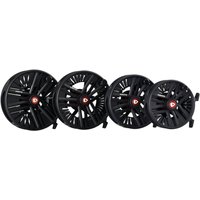
Reels worth adding: Lamson Liquid S-Series Smoke 3 Pack Fly Reel, Guideline AURA Bronze Fly Reel #56 and Guideline Aeon Fly Reel- Black/Silver #9/11.
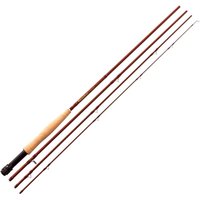
On the rods side, Shakespeare Oracle 2 Stillwater Fly Rod 9ft #6 4pc, Greys Lance Fly Rod 9FT 5LINE 4PC and Guideline Embrace Fly Rod and Reel Kit #7 9'.
Frequently Asked Questions
Are grayling coarse fish or game fish?
In England and Wales, grayling are legally classified as coarse fish. Despite being a salmonid (the same family as trout and salmon), they fall under the coarse fish close season legislation. This means they can be legally fished during October, November, December, January, and February on rivers where they are present, when trout fishing is prohibited.
Why are grayling called the Lady of the Stream?
The name is Victorian in origin and arose because grayling were considered a refined and elegant fish – the ornament of the finest chalk streams and fast upland rivers, requiring delicate presentation and technique to catch. It persists as the most evocative nickname in UK freshwater angling.
Do grayling smell like thyme?
Yes, surprisingly. Fresh grayling have a distinctive aromatic scent compared to other freshwater fish, variously described as cucumber, thyme, or violet. This scent is the origin of their Latin name Thymallus. The smell is most evident when handling a freshly caught fish.
Can I keep grayling?
Grayling are legally a coarse fish and there is no statutory protection. However, on most chalk streams and private fly fishing rivers, returning all grayling is a condition of any fishing permission. On public waters, there is no legal requirement to return grayling, though most specialist grayling anglers practise catch and release.
When is the best time to fish for grayling?
October to February is the prime period. Grayling are in peak condition in autumn and winter, the rivers are clear, and trout anglers have vacated the water. November and December are particularly productive on most rivers – grayling shoals are compact and located in consistent winter lies.