Chew Valley Lake is the largest lake in south-west England, covering approximately 1,200 acres (486 hectares) in the Mendip Hills south of Bristol. Managed by Bristol Water, it has been a nationally significant fly fishing venue since opening to anglers in 1956. Chew has produced some of the largest rainbow trout ever recorded at an English reservoir fishery and holds a justified reputation for quality fish alongside consistent sport.
The lake sits in a shallow valley – its average depth is just 5m with a maximum of around 10m – which means it warms quickly in spring and produces prolific insect hatches throughout the season. This shallowness also makes Chew more vulnerable to blue-green algae blooms in hot summers than deeper reservoirs, which can occasionally close the fishery during July and August.
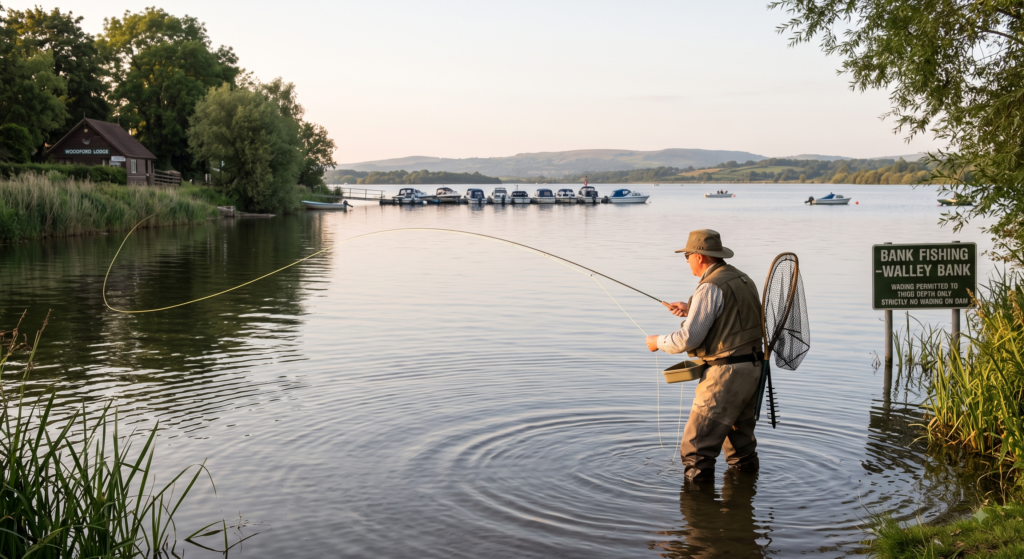
Access and Overview
Location: Chew Valley Lake, Chew Stoke, Bristol BS40 8TN
Managed by: Bristol Water Fisheries
Season: Typically late March/early April to late October. Check current dates with Bristol Water Fisheries as these change annually.
Day ticket: Bank and boat fishing day tickets, plus season permits. Advance booking strongly recommended for boats and busy periods.
Facilities: Fishing lodge (Woodford Lodge), tackle shop, cafe, car parking.
Trout Fishing at Chew
Chew is stocked with both rainbow and brown trout, with the emphasis on quality. Stocked fish range from 1.5lb to specimen fish well over 5lb, and wild-bred brown trout (from the lake’s own population) can reach 10lb+. The lake is famous for its large overwintered brown trout – fish that have survived from previous years’ stockings and grown on in the reservoir’s food-rich environment.
Bank fishing: Chew has extensive bank access with designated bank fishing points around much of the shore. The Heron’s Green area on the southern bank, the dam wall, and the Nunnery fields are well-known bank fishing areas. Wading is permitted in certain areas and is particularly productive when targeting rising fish in the shallows.
Boat fishing: Bristol Water operates a substantial boat fleet. Boat fishing is the way to access the open water and the mid-lake areas where larger fish often congregate. The Herriot’s Bridge area and the northern end of the lake are regularly productive for boat anglers.
Methods:
Buzzer and nymph: Chew is one of England’s finest buzzer fishing venues. The shallow, food-rich water produces prolific midge hatches from early April onwards. Classic buzzer patterns (Black Buzzer, Red Buzzer, Diawl Bach) fished on a floating or slow-sink tip line are the standard early-season approach. The “washing line” method – a buoyant dry fly or foam indicator suspending two or three nymphs at different depths – was developed and popularised on Midland and south-west reservoirs and works very well at Chew.
Dry fly to rising fish: Chew produces some of the best dry fly fishing of any English reservoir. The combination of its shallow margins and prolific hatches (midge, sedge, mayfly from Chew’s associated wetlands) creates regular rises that dry fly anglers can target specifically. A small dry sedge or adult midge imitation in the margins on a calm evening.
Lure fishing: Sinking line and lure fishing accounts for larger fish in summer, particularly from boats in the deeper northern areas. Booby nymphs on a sinking line are very effective at Chew and have been associated with the lake for decades.
The mayfly: Chew benefits from nearby wetland habitats that produce significant mayfly hatches from May into June. The mayfly period at Chew is one of the highlights of the south-west fly fishing calendar. Large dry flies (Wulff patterns, CDC Mayfly) or spent spinner imitations in the evenings can produce spectacular sport.
Coarse and Pike Fishing
Chew holds good coarse fishing including roach, perch, bream, and tench in its shallows and reed fringes. The lake is particularly noted for its large pike – fish of 25lb+ have been recorded – which feed on the abundant baitfish and introduced trout. Pike fishing is available from November after the trout season closes, managed by Bristol Water Fisheries.
Chew’s perch can be exceptional – specimen perch to 4lb+ are taken from the lake’s structure and drop-off areas.
Seasonal Tactics Summary
| Season | Best Method | Notes |
|---|---|---|
| April | Buzzer under bung, washing line | First hatches, excellent sport in margins |
| May-June | Buzzer, dry fly, mayfly | Peak hatch period, dry fly evening sessions |
| July | Intermediate lure, buzzer deep | Watch for algae – check fishery status |
| August | As July – shallows recover at dusk | Evening margins produce when main lake is warm |
| September | Nymph and wet fly, sedge evenings | Autumn re-stocking, good brown trout |
| October | Lure on sinking line | End of season specimens, deep boat fishing |
Frequently Asked Questions
Is Chew Valley Lake the same water as Blagdon Lake?
No. Chew Valley Lake and Blagdon Lake are two separate Bristol Water reservoirs in the Mendips. Blagdon (approximately 400 acres) is smaller and is managed alongside Chew but requires a separate permit. Both are fly-only trout reservoirs and both are excellent. Many anglers hold joint permits for both waters.
Can I fish Chew Valley Lake without a boat?
Yes, bank fishing is a significant part of Chew’s fishing and some of the best buzzer and dry fly fishing is from the bank, particularly when fish are rising in the shallows. However, to access the mid-lake areas and cover more water, a boat is a significant advantage.
What is the British record for rainbow trout?
Chew Valley Lake has contributed to record rainbow trout fishing. British record rainbow trout – verify current records with the British Record Fish Committee as reservoir fish continue to challenge records.
Is advance booking required for Chew Valley Lake?
Boat fishing should always be booked in advance – Chew’s boat fleet is in high demand, particularly on spring and autumn weekends. Bank fishing day tickets can often be purchased on the day but advance booking is recommended for busy periods. Contact Bristol Water Fisheries directly.
What rod weight is recommended for Chew Valley Lake?
A 9-10ft rod in #6-7 weight covers most Chew fishing. A #7 is the most versatile choice for boat fishing with lures and buzzer rigs. A lighter #5-6 is preferred for dry fly work in the margins. If fishing large lures on a sinking line, a #8 is useful. Most experienced Chew anglers carry two outfits – one for buzzers/nymphs and one for lure work.