Rutland Water is the largest man-made reservoir in England by surface area (3,100 acres / 1,255 hectares) and one of the most famous trout fisheries in Europe. Created in the 1970s by flooding the Gwash Valley near Oakham in Leicestershire, it has developed into both a world-class fly fishing venue and a productive coarse fishery, with specimen perch, pike, bream, and zander drawn from the enormous water volume.
The reservoir is owned by Anglian Water and managed for fishing through Rutland Water Fly Fishery. It produces exceptional rainbow and brown trout fishing from boat and bank, and in recent years has gained a growing reputation for specimen perch to over 4lb and pike to 30lb+.
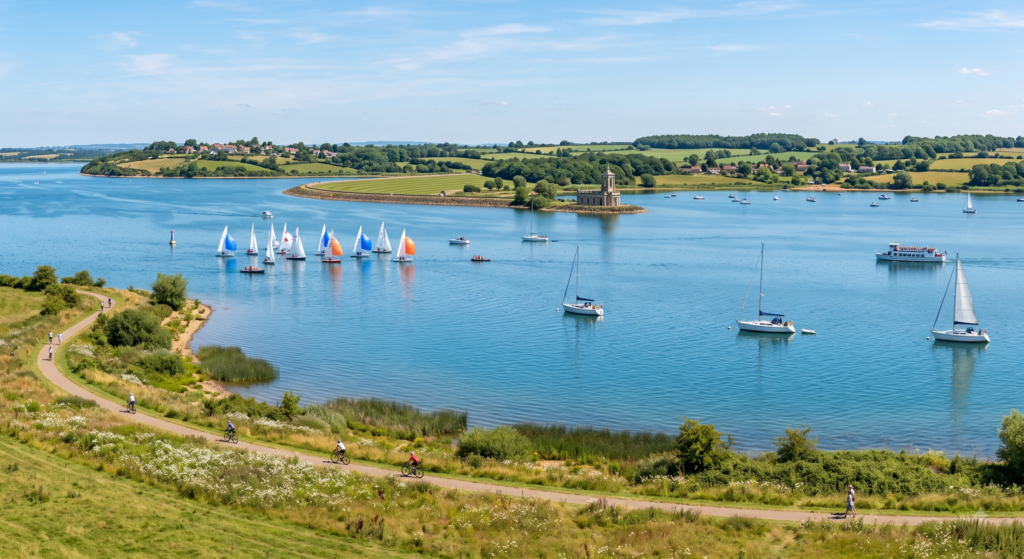
Trout Fishing at Rutland Water
Rutland Water Fly Fishery is one of the best-known trout fishing operations in England. It produces consistently large rainbow and brown trout throughout the season and attracts both recreational day-ticket anglers and competitive fly fishing events.
Season: Rutland Water Fly Fishery typically opens in late March or early April and fishes through to late autumn (usually October or November). Check the current season dates with Anglian Water fishing.
Species: Rainbow trout (the majority of stocked fish), brown trout (stocked in lesser numbers and typically harder to catch). Some wild brown trout have been produced from natural spawning, particularly in the inlet streams. Rutland produces very large fish – rainbow trout over 10lb are caught regularly.
Boat fishing: Rutland Water is best fished from a boat for much of the season. Bank access is limited in some areas, and the boat allows anglers to cover water and follow fish to their depth as conditions change. Boat hire is available from the fishing lodge at Normanton.
Methods:
– Floating line with buzzers (midge pupa imitations size 10-14): The most consistent method from April to June and September to October when midges are hatching. Fish at anchor with a washing line rig or under a bung indicator.
– Intermediate line with nymphs and wet flies: Through the summer when trout are feeding at depth on daphnia (tiny water fleas). A Di-3 or medium-sinking line with small lures or nymphs retrieved slowly.
– Lure fishing on fast-sinking line: From a drifting boat in summer, covering water quickly with large lures (Viva, Dancer, Blob) on a fast-sinking line to locate feeding fish.
– Dry fly on the surface: On calm summer evenings or during hatch periods. CDC dry flies, sedge patterns, or a daddy-long-legs (crane fly) in late summer.
Fishing lodge: Normanton fishing lodge (on the south bank near Normanton Church) is the main centre for Rutland Water trout fishing – boat booking, permits, fishing reports, and tackle available.
Coarse Fishing at Rutland Water
The coarse fishing at Rutland Water is less well known than the trout fishing but is of exceptional quality. The reservoir holds enormous stocks of bream, perch, roach, pike, and zander – species that developed alongside the trout following impoundment.
Perch: Rutland Water has produced some of the finest perch fishing in England. Fish regularly exceed 3lb and specimens over 4lb have been caught. Large shoals of perch exist throughout the reservoir, feeding on the abundant bleak, roach fry, and other small fish in the open water. Drop shot fishing and lure fishing on light tackle produces good catches.
Pike: Very large pike are present in Rutland Water. Fish over 20lb are taken regularly and 30lb+ specimens are present. The pike feed on the abundant coarse fish populations, particularly bream and roach shoals. Pike fishing is typically done with deadbaits (sea fish or small coarse fish) from boat or bank in autumn and winter.
Bream: Large shoals of bronze bream, many over 6-8lb, are present. Feeder fishing with groundbait and worm at range on the coarser fishing areas produces these fish. Rutland is not primarily managed as a coarse fishery, so check the current rules on accessing coarse fishing – some areas may require separate coarse fishing permits.
Zander: Zander are present in Rutland Water and the connected reservoir system. Not the primary target but taken on lures and deadbaits when targeting pike and perch.
Roach and bleak: Abundant and widespread throughout the reservoir. These form the food base for the predator populations. Roach to 1lb+ are common; specimen roach over 2lb are present.
Access and Permits
Trout fishing: Rutland Water Fly Fishery manages all trout fishing access. Day tickets, season permits, and boat hire are all available through the fishing lodge at Normanton. Visitor day-ticket fishing is available without advance booking on most days, though busy periods (summer weekends, competition days) may require pre-booking.
Coarse fishing: Coarse fishing access at Rutland Water has historically been limited compared to the trout fishing. Anglian Water manages some coarse fishing access; check the current position with Anglian Water Fishing for day-ticket coarse fishing availability and permit requirements.
Bank access: Public footpaths run along sections of the reservoir bank, and there is a cycling/walking route around the whole reservoir. Not all bank areas are available for fishing – check which areas have fishing access before setting up.
Disabled access: Rutland Water has some accessible fishing pegs with level access for wheelchair users. Enquire with the fishing lodge.
Species Records at Rutland Water
Rutland Water has produced some exceptional fish over the years:
– Perch: 4lb+ specimens recorded
– Pike: 30lb+ specimens taken
– Rainbow trout: double-figure fish regularly caught and some very large specimens
– Bream: fish to 12lb+ from the deeper areas
The reservoir’s size and relatively undisturbed character allows fish to grow to exceptional sizes.
Getting There and Facilities
Location: Rutland Water is near Oakham, Rutland – approximately 100 miles from London, easily accessible from the A1 and M1/A47.
Main facilities: Normanton fishing lodge (south bank) – boat hire, permits, tackle, café. Whitwell car park (north bank). Hambleton peninsula. Multiple car parks around the reservoir perimeter.
Accommodation: Hotels in Oakham town centre. Self-catering accommodation around the reservoir. The area is popular for cycling and walking holidays and has good visitor infrastructure.
Other Activities at Rutland Water
Rutland Water is a multi-use reservoir. As well as fishing, it is home to:
– Rutland Water Nature Reserve (administered by Leicestershire and Rutland Wildlife Trust) – birdwatching, osprey watch point (ospreys have been reintroduced and breed here)
– Anglian Water Birdwatching Centre at Egleton
– Cycling around the full perimeter
– Sailing, windsurfing, and paddle sports (from the watersports centre at Whitwell)
For anglers, this means certain areas may be restricted on specific days for other uses, particularly the watersports zones. The trout fishing areas and coarse fishing areas are generally well separated from the main watersports zones.
Frequently Asked Questions
Is Rutland Water the biggest lake in England?
Rutland Water is the largest man-made reservoir in England by surface area (approximately 3,100 acres). It is not a natural lake. Windermere in Cumbria is the largest natural lake in England by surface area. Rutland Water is the largest reservoir in England.
Can I fish for coarse fish at Rutland Water?
Coarse fishing is available at Rutland Water, though the primary managed fishery is for trout. Anglian Water has managed some coarse fishing access on specified areas. Check with Anglian Water Fishing for the current position on day-ticket coarse fishing – access arrangements have changed over time.
What is the best time of year for trout fishing at Rutland Water?
Spring (April-May) and autumn (September-October) are the most productive periods for consistent trout fishing. In summer, fish go deep following daphnia and are harder to find. Early morning and evening sessions tend to produce better than midday in summer.
Do I need a rod licence for Rutland Water?
Yes. An EA rod licence is required for all fishing at Rutland Water (both trout and coarse). Purchase before fishing at Post Offices, online through the EA website, or via the Angling Trust app. The trout/salmon and migratory fish licence is required if targeting trout.
Is Rutland Water suitable for beginners?
Yes, especially for trout fishing beginners. The fishing lodge offers day tuition and the boat fishing allows beginners to be guided to productive areas. Bank fishing is accessible and the trout are obliging for beginners using basic tactics like a buzzer under a bung indicator. For coarse fishing beginners, the perch fishing from the bank or boat is an excellent starting point.