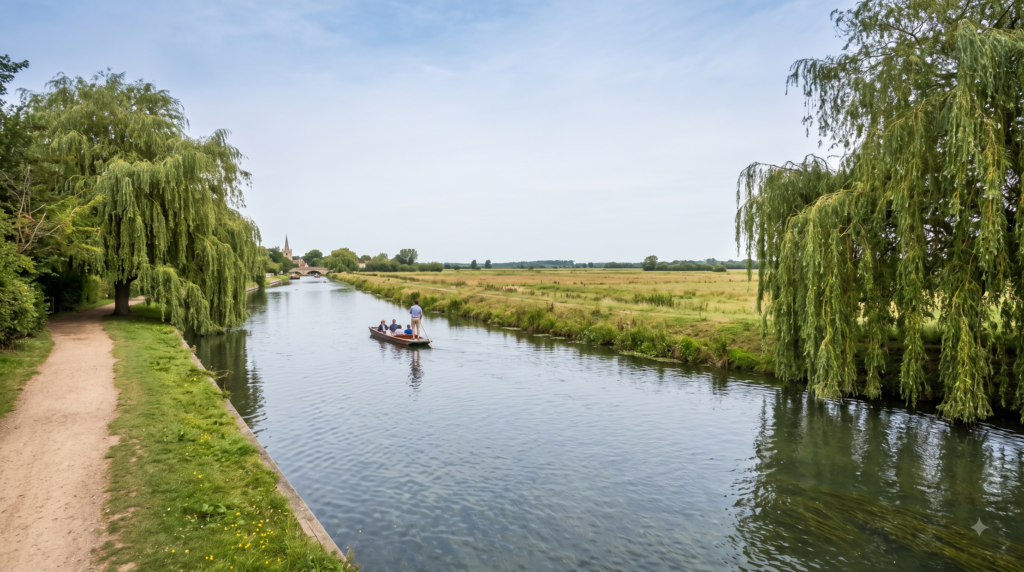
The River Cam flows through the flat agricultural landscape of Cambridgeshire, passing through Cambridge itself before meeting the River Great Ouse near Ely. It is a slow, clear-ish river in the lowland style – relatively narrow in its upper reaches, widening and deepening through Cambridge and into the fens below. For a river that passes through a city famous for tourists and punting boats, it produces some surprisingly good fishing: quality roach, bream, chub, decent pike, and a population of perch that has improved considerably in recent years.
Understanding the Cam’s character is necessary before fishing it. This is not a fast chalk stream or a swift-running barbel river. It moves slowly, the water is often green-tinged, and fish respond to groundbait and careful presentation rather than fast-water tactics.
The River System
The Cam is essentially two rivers joined. The upper River Cam drains from the chalk hills of south Cambridgeshire, passing through villages like Haslingfield and Grantchester before reaching Cambridge. Below Cambridge, the river is channelled into the Old West River and New Bedford River system (collectively the Bedford Levels), meeting the Great Ouse at Ely.
The Backs: The stretch of river flowing past the Cambridge colleges is one of the most visited sections. Heavily used by punts, canoes, and tourist boats, this is difficult fishing during the summer months. Before and after the tourist season it fishes better. Large bream can be found in the deeper holes, and roach shoals respond to groundbait in winter.
Grantchester to Cambridge: This is often considered the better day-ticket fishing stretch above the city. The river is narrower and less disturbed here. Roach, dace, chub, and perch are the main species.
Cambridge to Ely: The river broadens into typical fenland character below Cambridge. The Cam connects to Reach Lode, Burwell Lode, and other fenland drains in this section. Large bream shoals are resident here. Tench are present in summer. Pike up to double figures are taken regularly through autumn and winter.
Access and Permits
Much of the Cam’s fishing is controlled by the Cambridge Fish Preservation and Angling Society (CFPAS), one of the oldest angling clubs in England. Day tickets are available for some stretches, but club membership gives the most comprehensive access to the Cam’s better beats.
The Cam Angling website and local tackle shops in Cambridge (including those near Mitcham’s Corner) are the best source of current access and permit information. Some stretches on the upper river are privately controlled by college riparian owners.
The Environment Agency rod licence is required for all fishing. The fenland sections are navigable waterways so the additional CaRT Gold Licence requirement does not typically apply (they fall under Environment Agency jurisdiction rather than CaRT), but check access permissions for specific stretches.
Species
Roach
The Cam’s most reliable species. Roach respond to hemp and casters in summer, and bread punch or maggots in winter. The clearer upper reaches around Grantchester hold shoals of roach to about 1lb, while the deeper fenland sections occasionally produce specimens approaching 2lb.
Trotting a waggler float with a size 16 hook and single maggot down the deeper pools in winter is a reliable approach. Introduce hemp or casters loosely upstream to build a swim.
Bream
The fenland Cam below Cambridge holds good bream. Shoals in the 4-7lb range are not unusual. Bream fishing is a groundbait game – build a bed of groundbait mixed with casters and micro pellets, then wait for the shoal to settle over it. Open-end feeder or method feeder tactics both work. Expect slabs rather than personal bests; the biggest Cam bream are typically around 8-10lb, sometimes larger.
Chub
The upper stretches and the wooded sections near Grantchester hold the best chub. They respond to meat, breadflake, and luncheon meat fished on a simple running ledger in the deeper, slacker water near undercut banks. Cam chub tend to run to 3-4lb, with occasional fish to 5lb.
Pike
Autumn and winter are the main pike seasons on the Cam. The Ely section and the connecting lodes hold the biggest fish. Deadbaiting with a roach or smelt on a simple two-hook snap tackle, fished on a running leger, is the standard approach. Live baiting (where legally permitted) or large lures can also be effective.
Pike of 15lb+ are taken regularly from the Cam system; 20lb fish have been caught from the connecting drains.
Perch
Perch fishing on the Cam has improved significantly over the past decade. Perch to 3lb+ are now found in good numbers. Lure fishing with small jigs and paddle-tail soft plastics has become a popular approach, particularly in the deeper sections near bridge supports and lock structures. Worm on a drop-shot rig fished near structure also produces well.
Tench
Summer tench are present in the fenland stretches. They respond to groundbait approaches similar to those used for bream, fished in the calmer margins early morning and late evening. A size 12 hook with sweetcorn or a small boilie on a short hooklink over a bed of hemp and groundbait is a reliable tench tactic from May onwards.
Best Swims and Access Points
Grantchester Meadows: Public open access area with well-known roach and chub holding water. Very popular with beginners but fishes well early morning before foot traffic increases.
Sheep’s Green: In Cambridge itself, a popular but productive stretch that sees less pressure in winter. Good groundbait approach for bream and roach.
Bottisham Lock: Below Cambridge, the lock produces perch and pike from the lock cut and the river below. Club access required for most of the bank.
Upware: On the Old West River near where the Cam meets the Great Ouse system. Excellent bream and tench water, particularly in the early season. A starting point for anyone wanting to explore the broader fenland system.
Seasonal Summary
| Season | Best Approach |
|---|---|
| Summer (June-Sept) | Tench on groundbait in margins; bream after dark; roach on hemp and caster |
| Autumn (Oct-Nov) | Pike start coming on; chub on meat and breadflake; bream shoals active |
| Winter (Dec-Feb) | Roach on maggot and bread punch; chub on breadflake; pike on deadbait |
| Spring (Mar-May) | Roach and dace; perch on lures; avoid river margins where fish may be spawning |
Frequently Asked Questions
Is the Cam good for beginners?
Yes. The Cam’s slow current, shallow margins, and generally cooperative roach and bream make it suitable for anglers learning river fishing. The Grantchester area in particular is accessible and well-populated with fish. Fish a simple float rig with maggot and you will catch from most accessible stretches.
Can I fish from the punting boats or riverbank near the colleges?
The towpaths alongside the Backs are accessible on foot, but fishing alongside the main tourist punt routes during the summer holidays is difficult due to boat traffic. The fishing on this stretch is better in the off-season (October to March). Check CFPAS or Cambridge City Council for any specific restrictions on the college sections.
What is the best time of year for bream on the Cam?
The fenland Cam bream fish well from June through October. After the June 16 river close season lift, bream shoals can be found in pre-dawn and post-sunset feeding periods over groundbait beds. The best consistent results come from August through October when bream are active and predictable in their feeding times.
Are there any barbel in the River Cam?
Barbel are not native to the Cam and there is no significant established population. They are present in parts of the River Great Ouse (which the Cam joins near Ely) but the Cam itself does not hold barbel in the way that rivers like the Hampshire Avon or Great Ouse upstream do.
Do I need a CaRT licence to fish the Cam?
The navigable River Cam is managed by the Environment Agency (not CaRT) for navigation purposes, so a CaRT Gold Licence is not required. A standard EA rod fishing licence is required for anyone aged 13 and over.