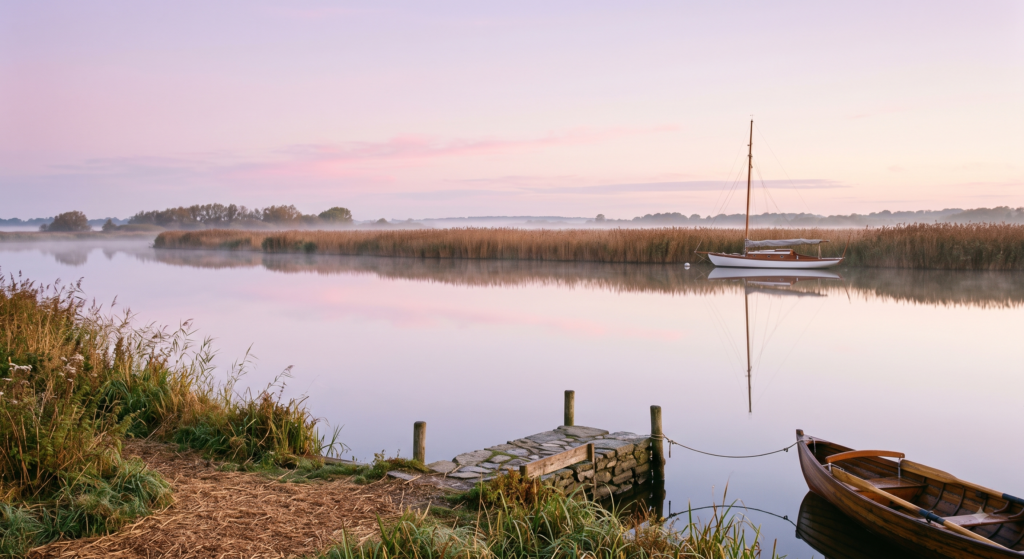
The Norfolk Broads is one of the UK’s finest freshwater fishing destinations. A network of rivers, broads (shallow lakes formed from medieval peat diggings), dykes, and tidal rivers covering most of north-east Norfolk and parts of north Suffolk, the Broads system provides some of the most diverse and accessible coarse fishing in England. Pike, roach, bream, perch, rudd, tench, and eels are all present in significant numbers; carp, zander, and barbel are found in parts of the system.
What makes the Broads particularly appealing is accessibility. Most of the main rivers (the Bure, Waveney, Yare, and Thurne) and many of the broads are navigable and accessible to bank and boat anglers alike, often with no membership required beyond a rod licence. The Broads Authority and the Environment Agency manage access to much of the public water.
Overview
The Broads system drains through six main rivers: the Bure, the Ant, the Thurne, the Yare, the Chet, and the Waveney. Most are tidal in their lower reaches, and the tidal influence extends well inland in some areas. Fishing on the tidal reaches requires a different approach to static freshwater – lead weights and baits are moved by the tidal flow, and feeding fish position themselves based on the direction and speed of the tide.
The main broads (Barton Broad, Hickling Broad, Wroxham Broad, Horsey Mere, and many others) are shallow (typically 1-3m deep), rich in aquatic plants and invertebrates, and very productive for a wide range of species. The water can be clear in some broads and turbid in others, depending on the influence of boat traffic and the health of the macrophyte vegetation.
Species in the Norfolk Broads
Pike: The headline species for many anglers visiting the Broads. The system holds exceptional pike – double-figure fish are regularly caught, and fish over 20lb are caught each year from the major rivers and broads. Hickling Broad, Horsey Mere, and the River Thurne are the most consistent big pike locations.
Roach: The traditional bread-and-butter Broads species. The rivers and broads hold large numbers of roach; fish over 1lb are relatively common and 2lb+ fish are caught each season from the Bure and Waveney in particular.
Bream: Large shoals of bream inhabit the broads and rivers. Fish of 3-6lb are typical; genuine specimens (8lb+) come from Hickling Broad, Barton Broad, and the River Bure.
Tench: Very good tench fishing in the early season (June to August) from the broads and dykes. Fish to 6lb+ are present.
Perch: The Broads holds strong perch populations throughout, including from the boat yards, bridge piles, and reed bed edges. Drop shot fishing has produced excellent perch from Broads rivers.
Rudd: Rudd are present in many of the more remote broads and dykes. They are particularly associated with reed bed margins and are best targeted on the float with bread or maggot near the surface in summer.
Zander: Zander were introduced to the Relief Channel near Denver (Fenland) and have spread into parts of the Broads system via the Yare and connecting waterways. Not dominant throughout the system but present and growing in number.
Carp: Commercial fisheries on the edge of the Broads system hold carp, and the rivers contain carp in some stretches. The open Broads are not primarily carp destinations.
Eels: Very good eel fishing throughout, particularly from the dykes and deeper broads at night. The eel population has declined as nationally but the Broads still offers some of the better eel fishing in England.
River Thurne System
The River Thurne is the most celebrated pike fishing destination in the Norfolk Broads. Running from Hickling Broad through Potter Heigham, Martham, and joining the Bure near Thurne Mouth, the Thurne system – including Hickling Broad and Horsey Mere – has produced some of the largest pike ever caught in freshwater England, including the famous fish of Martham Broad in the 1980s and many 20lb+ fish since.
Hickling Broad: A National Nature Reserve and one of the finest pike and bream waters in the country. Access is by boat (the broad is not easily accessible from the bank). Day permits from the Broads Authority or local boatyards. Sensitive habitat – conservation rules apply.
Horsey Mere: Exceptional pike water. Connected to the Thurne system; boat access. The Thurne between Potter Heigham and Thurne Mouth is accessible from the bank in places and produces consistent pike through winter.
Martham Broad: One of the finest wild broads for general fishing – bream, tench, roach, rudd, and pike. Access by boat; a quieter and less boated alternative to the more popular broads.
River Bure System
The Bure runs from Aylsham south-east through Wroxham, Horning, Acle, and joins the Yare at Breydon Water. It is the busiest of the Broads rivers for boat traffic but also holds excellent fishing throughout.
Wroxham Broad: Connected to the Bure near Wroxham; good mixed fishing for bream, roach, tench, and perch. Day ticket or club access through Wroxham Broad private banks.
Barton Broad: One of the largest broads in the system and a very good bream water. Access by boat; accessible from the bank at limited points via public footpath and Barton Turf.
River Bure at Horning: Bank access at Horning village and surrounding areas; mixed fishing for roach, bream, perch, and pike. Some free fishing on the river bank; check with local tackle shops for current access.
River Waveney
The Waveney marks the southern boundary of much of the Broads, running through Beccles and Bungay. Less-boated and more of a traditional river fishery than the Bure or Thurne, the Waveney offers excellent roach, bream, and pike fishing.
Beccles: Some of the best free bank fishing in the Broads system; the Waveney through and below Beccles holds quality roach, bream, and pike accessible from public banks in the town and along the Quay area.
Carlton Marshes (Suffolk Wildlife Trust): A significant wetland reserve adjacent to the Waveney with accessible fishing from managed banks.
Access and Permissions
Free fishing: Large sections of the main Broads rivers are public navigation and the bank is publicly accessible under riparian access provisions. Fishing from the public bank requires a rod licence only in these areas. The Bure, Waveney, and Yare have significant stretches of accessible bank.
Broads Authority: The Broads Authority manages public access to navigation and some fishing areas. Day permits are required on some managed broads.
Angling clubs: The Norfolk and Suffolk Angling Federation, Norwich and District Angling Association, and various local clubs hold water on several rivers and broads.
Boating access: Many broads are most easily accessed by boat. Day-hire boats and sailing cruisers are available from boatyards throughout the Broads, and many visiting anglers combine fishing with a boating holiday.
A current rod licence from the Environment Agency is required for all fishing.
Pike Fishing in the Broads: Key Points
The Broads is a Mecca for UK pike anglers. Key points for pike fishing here:
- Wire traces mandatory. Pike jaws can cut through any mono or braid; always use a minimum 20lb seven-strand wire trace.
- Unhooking equipment: Long-nose forceps and wire cutters. Broads pike can run large.
- Catch and release strongly advised. The Broads pike fishery depends on careful handling and return of all fish. Kill a large Broads pike and you will face strong disapproval from the local angling community.
- Best season: October to February.
- Best baits: Deadbaits (mackerel, smelt, roach). Lures (swimbaits, large shads) are increasingly popular.
Frequently Asked Questions
Do I need a permit to fish the Norfolk Broads?
For most public bank sections of the main rivers (Bure, Waveney, Yare), a rod licence is all that is needed. Some broads are managed by the Broads Authority or private bodies and require day permits. Hickling Broad and Horsey Mere require permits. Check locally before fishing.
When is the best time to fish the Norfolk Broads?
For pike: October to February, with November to January the peak. For bream and tench: June to September. For roach: June to October, and again through winter (January to March) when the first spawned fish are feeding actively on slower days.
Are the Norfolk Broads good for big bream?
Yes. Some of the finest big bream fishing in England is available in the Broads. Barton Broad, Hickling Broad, and the River Bure all produce fish over 8lb regularly. Groundbait with maggot, caster, and worm is the standard approach for summer bream sessions.
Can children fish the Norfolk Broads?
Yes. The accessible bank sections of the main rivers are excellent beginner and family fishing destinations – roach, rudd, bream, and perch are catchable on simple float tackle and there is no complicated access requirement beyond a rod licence (free for under-13s, free for 13-16 year olds).
Is the Norfolk Broads close season the same as other rivers?
The statutory coarse fish close season (15 March to 15 June on rivers in England) applies to the flowing river sections of the Broads. The broads themselves (still water sections) are not subject to the statutory close season, although individual fishery rules may impose their own seasonal restrictions. Check whether the section you intend to fish is classed as a river or a still water.