UK freshwater fishing is regulated by the Environment Agency in England, Natural Resources Wales in Wales, and Marine Scotland in Scotland. The rules are more straightforward than many anglers assume – but getting them wrong carries real consequences, including fines up to £2,500 and confiscation of tackle.
The guides in this section cover everything an angler needs to know: rod licences, close seasons, minimum size limits, byelaws, and the specific rules that apply to particular species and water types. If there is ambiguity or a rule that depends on the specific water, that is flagged clearly.
The Rod Licence
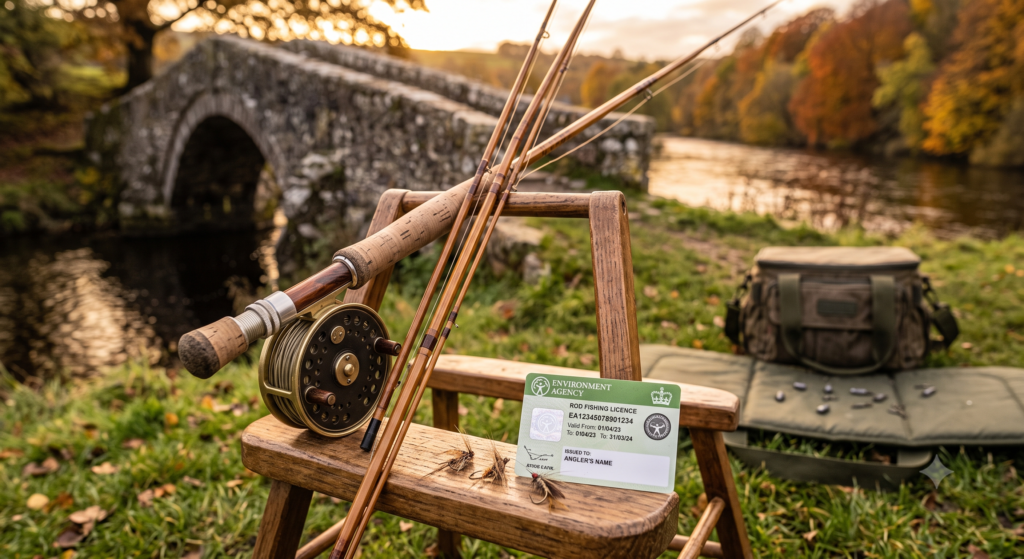
Every angler fishing for freshwater fish in England or Wales must hold a current Environment Agency rod licence. This applies to everyone aged 13 and over. Under-13s fish free. The licence is required for fishing from a bank, boat, or any other position, on rivers, lakes, reservoirs, canals, and other freshwater.
A 1-rod licence, an all-methods licence, and a trout and coarse licence are available at different price points. Salmon and sea trout fishing requires a specific migratory fish licence in addition. Concession prices apply to people aged 65+, disabled anglers, and young people aged 13-16.
Close Seasons
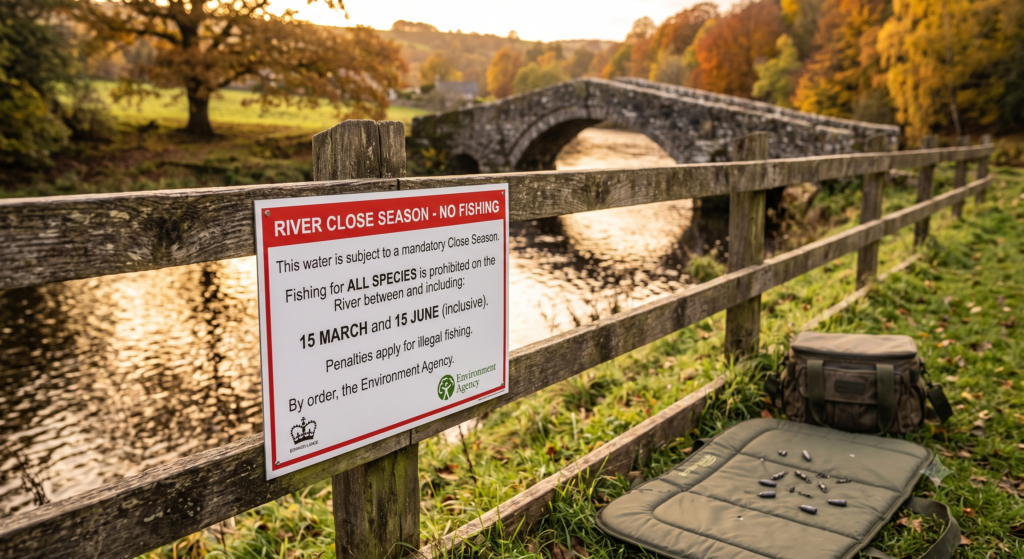
The freshwater close season exists to protect fish during spawning. In England, the statutory close season for coarse fish on rivers, streams, drains, and connected waterways runs from 15 March to 15 June (inclusive) each year. This applies to all coarse fish species including pike, perch, bream, roach, barbel, chub, tench, and carp.
Still waters (lakes, ponds, reservoirs, and gravel pits) generally have no statutory coarse fish close season, though some club rules and fishery regulations impose voluntary or rule-based restrictions during spawning.
Trout fishing seasons vary by water type and region. Brown trout rivers in England typically open on 1 April and close in September or October. Rainbow trout put-and-take fisheries are often open year-round.
Salmon close seasons vary significantly by river. The specific dates for major salmon rivers are set by Natural England or Natural Resources Wales.
Close season guides by species are included in each species profile.
Minimum Size Limits
Most UK freshwater species have no statutory minimum size limit, though the British Record Fish Committee and conservation best practice both encourage returning undersized fish. Some club and fishery rules impose their own size limits.
Sea fish have statutory minimum sizes set by the Marine Management Organisation (MMO). These sizes change over time as stock assessments are updated. Always check current MMO guidance before retaining sea fish.
Byelaws
The Environment Agency can issue regional byelaws that modify the national rules for specific rivers or areas. These might impose additional restrictions on certain baits, methods, or fishing locations, or extend close seasons beyond the national minimum. Byelaw searches are available on the EA website.
Scotland and Wales
Scotland has different rules from England. Freshwater coarse fishing in Scotland generally does not require a rod licence (there is no statutory licensing system for coarse fish). Game fishing (salmon and sea trout) is managed by river proprietors and boards rather than a national licence.
Wales largely follows England’s rules for rod licences and close seasons, administered by Natural Resources Wales. Some byelaws differ from England.
- Do Children Need a Fishing Licence in the UK?
- Coarse Fishing Close Season UK 2026
- Freshwater Fishing Regulations England and Wales
- Minimum Size Limits UK Fishing
- Barbless Hooks UK: Rules and Requirements
- Night Fishing Rules UK
- Invasive Species UK Fishing
- Crayfish Regulations UK