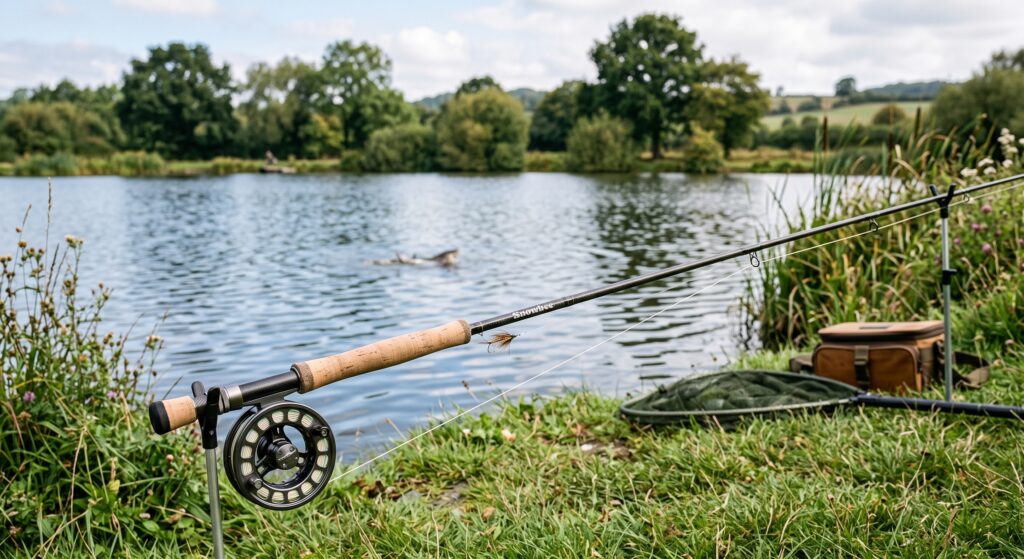
Trout fishing in the UK splits across three rod types depending on method: fly rods for the traditional approach, spinning rods for stocked stillwaters and some rivers, and light float/feeder rods for bait fishing where it is permitted. This list covers the best options across all three, from entry-level to serious upgrade territory.
Fly Rods for Trout
1. Entry-Level 9ft #6 Fly Rod
The standard starting point for UK stillwater trout. A 9ft #6 casts a reasonable distance, turns over the buoyant flies and lures used on reservoirs, and is forgiving enough for a beginner’s casting stroke to still put a fly on the water.
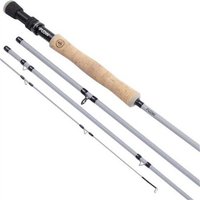
2. Mid-Range 9ft #5 River and Stillwater Rod
A #5 is a genuine do-it-all weight – light enough for river trout on nymphs and dries, still capable of turning over a small lure on a stillwater. This is usually the second rod anglers buy once they know they are staying in the sport.
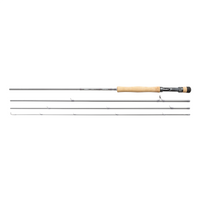
3. Fast-Action 10ft #7 Reservoir Rod
Built for distance and wind. A 10ft #7 punches lines out into a headwind on big reservoirs like Rutland or Grafham and turns over the bigger lures used for early-season boat and bank fishing.
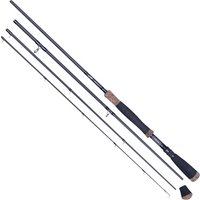
4. Short 7ft6 #3 Small Stream Rod
For tight, overgrown brooks and small becks where a 9ft rod cannot be worked through the trees. Short, light, and designed for close, accurate presentation rather than distance.
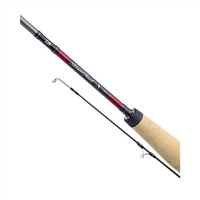
5. Budget Starter Fly Combo
A pre-matched rod, reel, and line combo aimed squarely at beginners. Not as refined as a rod bought and matched separately, but removes the guesswork of line weight matching for a first purchase.
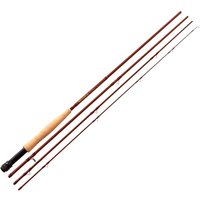
Spinning Rods for Trout
6. 6-7ft Light Spinning Rod (3-15g)
The standard light spinning rod for trout on stocked stillwaters that permit lure fishing. Casts small spoons and spinners accurately without being so light that a decent rainbow trout overpowers it.
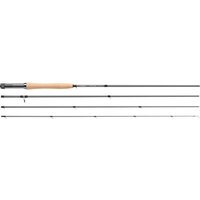
7. Telescopic Travel Spinning Rod
Useful for anglers who want a trout rod that packs down small for travel or opportunistic sessions. A compromise on action compared to a one-piece rod, but genuinely convenient.
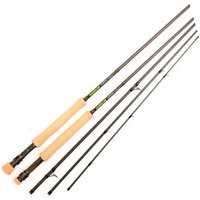
Float and Feeder Rods for Trout
8. 11-12ft Light Float Rod
Where bait fishing for trout is permitted (check fishery rules carefully – many stillwaters are fly-only), a light float rod with a soft tip presents bread, worm, or sweetcorn naturally under a small float.
9. Light Feeder Rod for Stillwater Trout
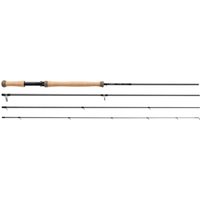
Some day-ticket trout fisheries permit a light feeder approach with sweetcorn or pellet. A soft-tipped feeder rod in the 10-11ft range with a light quivertip shows bites without spooking wary stocked fish.
10. Upgrade: Premium Fast-Action #6 Fly Rod
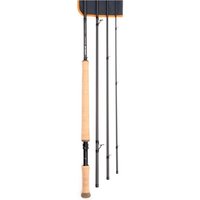
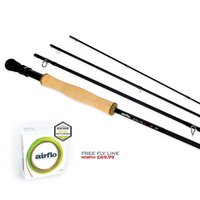
For anglers ready to spend more, a premium #6 with a genuinely fast action, better components, and superior line control is the natural upgrade from an entry-level rod once technique has caught up with the tackle.
What Actually Matters When Choosing
Line weight matters more than brand. A #5 or #6 covers most UK trout fishing; do not overthink beyond that as a beginner. Rod length affects casting distance and line control more than raw power – longer rods generally help on open stillwaters, shorter rods help on tight rivers. See our full guide on choosing a fishing rod for the fundamentals that apply across all disciplines.
Gear that fits this
Gear that suits what this covers, by type.
Fly lines: Wychwood Connect Series 2 Et Rocket Floater Fly Line #6, Airflo Sixth Sense 2 Floating Fly Line WF 7/8 and Airflo Superflo Mini Tip Fly Line 6' Fast Int. Tip WF7.
For leaders and tippet, Airflo Tactical Polyleader Ultimate Dry 8ft Floating, Orvis Mirage Flurocarbon Tippet 1x 11.8lb 30m and Maxima Clear 100m Line 5 lb are all worth a look.
Reels worth adding: Lamson Remix S-Series Smoke 3 Pack Fly Reel, Guideline Aeon Fly Reel- Black/Silver #11/13 and Guideline NOVA Reel Stardust #8/10.