Weather is one of the most significant variables in UK fishing, yet many anglers fish on regardless of conditions without adjusting their expectations or approach. Understanding how temperature, barometric pressure, wind direction, and rainfall influence fish behaviour can make the difference between a productive session and a blank.
This guide covers how the main weather variables affect freshwater fish and what practical adjustments to make when conditions change.
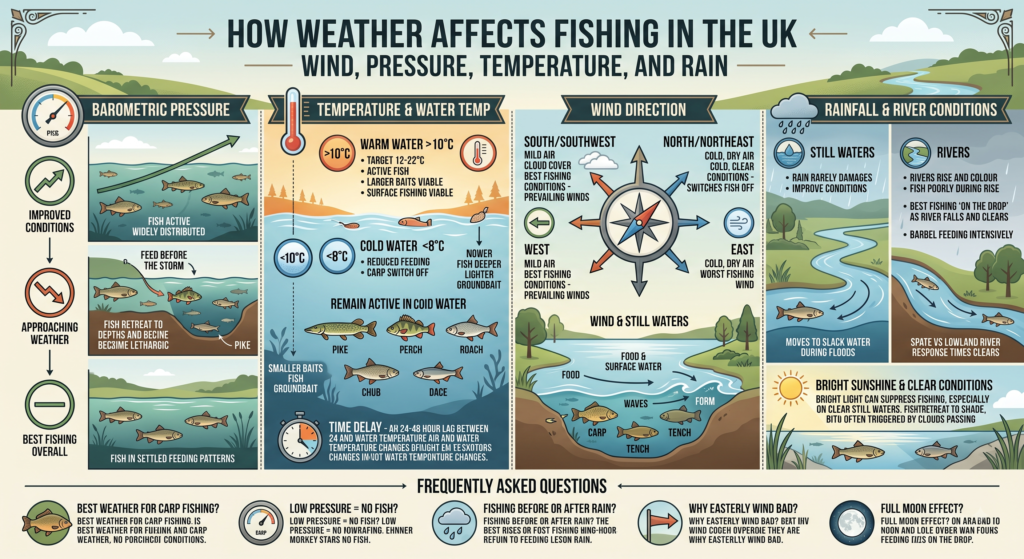
Barometric Pressure
Barometric pressure – atmospheric pressure measured in millibars (mb) or inches of mercury (inHg) – is the variable most discussed among experienced freshwater anglers, particularly carp and specimen anglers.
Rising pressure
A rising barometer (pressure increasing) typically means clearing conditions and improved weather ahead. Fish respond positively to a steady, prolonged rise in pressure – they become more active, feed more confidently, and distribute more widely through the water column. A prolonged period of stable high pressure (1015-1025mb) with light winds is often associated with excellent fishing, particularly for surface-feeding carp and browsing tench in summer.
However, a rapid rise in pressure immediately after a period of low pressure can temporarily suppress feeding as fish adjust to the change.
Falling pressure
A falling barometer indicates an approaching low-pressure system (rain, wind, unsettled weather). Fish often feed intensively for a short window just before the pressure drops significantly – this is the “feed before the storm” effect many experienced anglers describe. A brief period of 2-6 hours before an arriving front can be excellent.
Once the pressure is actively falling and the front arrives, fish typically retreat to depth, stop feeding actively, and become lethargic. Pike are an exception – they can remain active in low pressure conditions and falling barometer situations.
Stable pressure
Long periods of stable pressure (neither rising nor falling significantly) allow fish to settle into predictable feeding patterns. This is generally the best fishing overall. Fish feed at predictable times and in predictable places. On still waters with stable pressure, feeding often concentrates into dawn and dusk windows.
Practical note: Weather apps and weather websites show pressure as a graph. Check the trend, not just the current reading. A steadily rising line is positive; a plunging line is not.
Temperature and Water Temperature
Air temperature and water temperature are related but not identical. Water temperature changes more slowly than air temperature, which means the effects of a cold night or a warm sunny day appear in the fishing one to two days after the air temperature change.
Warm water (above 10°C)
Most freshwater coarse fish are most active when water temperatures are above 10°C. Carp, tench, bream, and barbel are at their most reliable feeding in the 12-22°C range. Roach and chub extend feeding a little cooler.
In warm water:
– Feed fish at more points through the day, not just dawn and dusk
– Use larger, more conspicuous baits
– More species are active and catchable
– Surface fishing (floating bread, surface pellets, floaters) becomes viable for carp
Cold water (below 8°C)
Below 8°C, most coarse fish significantly reduce their metabolic rate and feeding. Carp in particular are notorious for switching off in cold water – a well-stocked lake in January may produce little or nothing in below-5°C conditions.
Species that remain active in cold water:
– Pike: Active throughout winter, often most active in 4-8°C
– Perch: Feed in cold water, particularly for lures and worm
– Roach: Remain catchable in cold water on maggot and bread
– Chub: Often described as the most cold-hardy of UK coarse species; will take breadflake in near-freezing conditions
– Dace: Active in cold clear rivers
Adjustments for cold water:
– Fish smaller baits (nuisance fish reduced, bigger fish taking smaller mouthfuls)
– Fish slower – retrieve lures more slowly, leave baits longer
– Fish deeper – fish often drop to the deepest warmest water in cold conditions
– Fish lighter groundbait in smaller quantities (cold fish cannot process heavy feed)
Water temperature vs air temperature lag
If there is a warm spell after a cold period, the fishing typically improves 24-48 hours after the air warms, once the water has begun to rise in temperature. Conversely, after a warm period, water cools more slowly than air – so a cold snap does not immediately switch the fishing off.
Wind Direction
UK anglers often refer to the wind direction adage: “wind from the south has bait in its mouth; wind from the north, the angler stays at home.” This is a simplification but has some practical truth.
South or southwest winds: Often bring mild, humid air from the Atlantic. Associated with cloud cover, mild temperatures, and often the best fishing conditions. This is the prevailing UK wind and most productive fishing is associated with it.
West winds: Generally mild and productive, similar to southwest.
North or northeast winds: Cold, dry air from continental Europe or the Arctic. Associated with cold, clear conditions that switch fish off, particularly in spring when a NE wind can undo weeks of warming. In summer a NE wind is less damaging.
East winds: Often the worst fishing wind for most species. Cold, dry continental air with a cutting quality. Many experienced anglers will not fish in a persistent easterly.
Wind and still water fishing
On lakes and reservoirs, wind pushes surface water (and with it, food items, floating debris, and warmer surface layers) toward the downwind bank. Fish follow the food. The downwind bank (the bank the wind is blowing toward, creating wave action) is often the most productive on a still water.
This is particularly true in summer for carp and tench. In winter, fish may stay deeper and away from the most exposed bank; the wind’s thermal effect is less important.
Rainfall and River Conditions
Rain has very different effects on river fishing and still water fishing.
Still waters
Rain rarely directly damages still water fishing. A warm rain actually improves conditions by cooling overly warm summer water and refreshing oxygen levels. A prolonged heavy rain may slightly colour a lake but the effect is usually minor. Rain can push fish into activity by disturbing the surface, reducing light penetration, and creating a “cover” effect that makes fish less cautious.
Rivers
Rivers rise and colour after significant rain, sometimes dramatically. A coloured, rising river fishes poorly for most species. The fish become disorientated in the turbulence and often move to slacker water, and visibility is so reduced that visual feeders (like dace and chub) cannot find baits easily.
The best river fishing after rain is typically on the drop – as the river falls from its peak and begins to clear. This is when barbel in particular feed intensively; they move back into their regular feeding lies and eat heavily as the river drops. A falling-to-normal-level Bristol Avon or Wye with 6-12 inches of clarity can produce outstanding barbel fishing.
Spate rivers (particularly Welsh and northern rivers that respond quickly to rainfall) rise and fall fast. A spate might peak 6-12 hours after heavy rain and be fishable again 24-36 hours later. On English lowland rivers (Thames, Severn), the rise is slower and the settle-out takes longer – sometimes 3-5 days after heavy rain.
Bright Sunshine and Clear Conditions
Bright sunshine can suppress fishing significantly on clear still waters. When light penetration is high and carp or tench are visible resting in the water, they are typically not feeding. The most productive windows become first and last light, and overnight.
In rivers, bright sunshine can make fish cautious. Chub, barbel, and roach retreat to shade under overhanging trees and undercut banks in bright conditions. Fishing in the shadow of a bridge or tree line is more productive than fishing open, bright water.
A cloud passing over the sun and producing momentary shade often triggers a bite that had been absent for an hour.
Frequently Asked Questions
What is the best weather for carp fishing?
A mild, overcast day with a southwesterly breeze and stable or slowly rising pressure, with water temperature between 15-22°C. These conditions produce the best feeding activity for most coarse species including carp. Avoid bright sunshine with a cold easterly or a rapidly falling barometer.
Does low pressure mean no fish will bite?
Not always, but low pressure is generally negative for coarse fish. Perch, pike, and sometimes chub will feed in low-pressure conditions. The window just before a falling pressure system arrives can also be productive, so watch the forecast and time sessions accordingly.
Is fishing better before or after rain?
For rivers, after the river drops and begins to clear following rain is usually the best time. For still waters, a mild rain during the session is often fine or even beneficial. Heavy rain during a session on a still water is unpleasant but rarely stops fish feeding.
Why is an easterly wind bad for fishing?
The east wind typically brings cold, dry continental air to the UK. This drops water temperatures and air temperatures together, creates clear conditions (high pressure), and tends to produce the opposite of the mild, cloudy conditions most coarse fish prefer. It is also physically unpleasant for anglers with few trees providing shelter on most water’s eastern bank.
Does a full moon affect UK fishing?
The full moon effect is debated. Many experienced anglers report that fish feed intensively the night before and the night of the full moon (particularly carp and barbel), leading to harder daytime sessions. The evidence is largely anecdotal. The effect of moon phase is genuinely difficult to separate from other variables like weather, season, and water temperature.
← Back to From the Bank – UK Fishing Articles, Tips and Stories