Highland loch fishing is the version of Scottish angling that ends up on postcards, and for once the reality lives up to it. What the postcards do not tell you is that the difficulty here is logistical rather than technical. The casting is not hard. Working out where to fish, how to get a permit, and what to do when the weather turns is the actual skill.
What the fishing is
Two very different things sit under the Highland heading.
The first is wild brown trout fishing on hill lochs and larger waters, where fish average modest sizes and you catch them on traditional loch style tactics from a boat or by wading. The pleasure is in the setting and the wildness of the fish rather than the size.
The second is specimen hunting on the big deep lochs, where ferox trout and pike grow to serious sizes. That is a specialist pursuit involving trolling, deep water and a lot of blank days, and it is not something to attempt on a whim.
Loch Awe in Argyll is the water that offers both, and it has its own piece in this series.
Caithness and the far north
The Caithness lochs are the classic wild brown trout destination and my personal favourite corner of the country. Loch Watten is the best known, offering traditional loch style fishing with wild browns averaging just under a pound and good numbers of fish in the two to three pound class. It is fly only.
Access to a lot of the Caithness waters runs through the Dounreay Fly Fishing Association, established in 1958, which owns and maintains twenty boats distributed around ten Caithness wild trout lochs. Joining is the practical route to fishing them properly. There is more detail in the Loch Watten piece.
Planning matters more than tackle
The single biggest mistake visiting anglers make in the Highlands is underestimating distance. Two lochs that look adjacent on a map can be an hour apart on single track roads, and that hour is longer with a caravan in front of you.
Pick a base and fish within a sensible radius of it rather than trying to tick off famous names. You will fish more and drive less, and you will learn a small area rather than skimming a large one.
Weather changes fast and matters more than at a stocked lowland fishery. A hill loch in a big wind is dangerous in a small boat, and the decision to not go afloat is one you should be prepared to make. Bank fishing and wading is the fallback, and on many of these waters it is genuinely productive rather than a consolation.
Tackle
A 10ft #6 covers wild brown trout fishing across the Highlands. Floating line, team of three traditional wets, and that is most of it. These are not sophisticated fish and there is no need for a fly box the size of a briefcase.
Bring midge repellent that you actually trust, and a head net. This is not a joke, and anyone who has fished the west coast in July knows it.
For the ferox and pike side, the tackle requirement changes completely and so does the day. That is a trolling operation with heavy gear and downriggers, and it is worth going with someone who knows the water rather than working it out yourself.
Permits
No rod licence in Scotland, but permission is still needed. In the Highlands that usually means a club, an estate, a hotel or an association, and in some places a permit from a local tackle shop covers a spread of waters.
The wider system is explained in our Scotland loch fishing guide. Sort permits before you travel, because shop opening hours in the far north are not a given.

Gear that fits this
Gear that suits what this covers, by type.
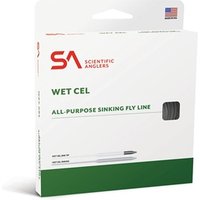
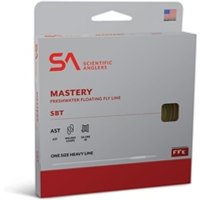
Fly lines: Scientific Anglers Wet Cel Intermediate Clear Weight Forward Fly Line #5, Scientific Anglers Mastery SBT Weight Forward Floating Fly Line #3 and Airflo SuperFlo 40+ Sniper Fly Line Floating WF10.
For leaders and tippet, Orvis Mirage Flurocarbon Tippet 1x 11.8lb 30m, Maxima Clear 100m Line 5 lb and Airflo Sightfree G3 Fluorocarbon 50m 8lb 0.21mm are all worth a look.
Reels worth adding: Guideline Fario Fly Reel Champagne ±4, Wychwood Truefly SLA MKII Silver Fly Fishing Reel #5/6 and Lamson Liquid S-Series Smoke 3 Pack Fly Reel.
On the rods side, Wychwood Flow Fly Rod 6ft #3, Daiwa Wilderness Trout Fly Rod 10' 4PC #7 and Guideline Embrace Fly Rod and Reel Kit #6 9'.

Mike Talbot grew up in Cornwall and had a rod in his hand before he was tall enough to reach the rod rest properly. His early fishing was mackerel from the harbour wall and plaice on the beaches at low tide, but bass took over in his late teens and have never really let go.
He moved to Pembrokeshire in his thirties for the coastline as much as anything else, and now fishes a mix of rock marks, estuaries, and boat trips across West Wales and the Bristol Channel. He targets bass on surface lures through summer, drops down to soft plastics and HMDs through autumn, and fills the winter with wrasse fishing on the rock marks when conditions allow. Personal best bass: 8lb 4oz, caught on a floating stickbait at first light on a calm August morning.
At The River Bend, Mike writes the sea fish species guides, sea fishing technique articles, and the coastal access and regulation content.
Covers: Bass, wrasse, mackerel, sea bream, pollock, sea fishing techniques, shore fishing, boat fishing, tidal and coastal access rules