Winter fishing is mostly a question of timing. The fish are still there, but they feed in short spells, move less and want smaller meals, so a session that fills a net in September can produce two bites in December.
Some product links in this post are affiliate links to Total Fishing Tackle and Fishing Tackle & Bait. If you buy through one we may earn a commission at no extra cost to you. How that works.
What cold water does to feeding
Fish are cold-blooded, so their metabolism follows the water temperature. As it falls they need less food, digest it more slowly and have little reason to chase anything. The result is fewer bites, shorter feeding spells and a strong preference for easy meals that don’t require effort.
That is why winter bites often come in a short window rather than all day. The middle of the day tends to be the mildest stretch, and a sudden drop in temperature or a hard frost overnight can shut things down for a day or two. A stable, mild spell, even a grey one, is usually better than a bright, freezing morning.
Where the fish go
In cold weather fish settle where they can sit comfortably with minimal effort. On rivers that means slacker water on the inside of bends, behind bridge pillars and in the deeper glides below a fast run, away from the main flow. On canals and stillwaters it means deeper water, often near the middle or close to cover such as moored boats, bridge holes and marginal reeds.
If you fish the same swim all summer, move. A spot that was ideal in July, a fast shallow run or a weedy margin, can be empty in January. Walk the bank first and pick water that looks like somewhere you’d choose to stand still in the cold.
Species that keep feeding
Chub are the standard winter fish on rivers, and they keep feeding in conditions that stop others, particularly in coloured water. Roach and dace shoal tightly and give good sport on fine float tackle, which is why a roach session on a cold, clear day can still be productive. Perch and zander feed at the edges of the day, and pike are at their best in winter, as our pike in winter guide explains.
Carp and barbel slow down hard. They can still be caught on stillwaters and rivers in mild spells, but bites are rare, and our winter carp guide covers how to approach that. If your aim is a bagful, silver fish and chub are the better winter targets.
Scale everything down
Fish smaller. Use finer line, smaller hooks and tinier baits, and feed lightly. Cold fish don’t want a big spread of food, and over-feeding can kill a swim quickly.
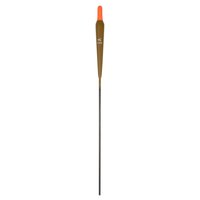
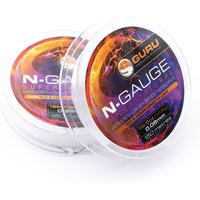
For float work, a pattern like the Korum Fineliner stick float suits slow to steady river flow, while a size 16 Guru F1 barbless hook tied to a fine hooklength gives you the delicate presentation winter fish want. Tie it to Guru N-Gauge Super Natural Clear 0.10mm and you’ll see more bites than on heavier line.
| Condition | What to do |
|---|---|
| Cold, clear, bright | Fish fine and light, feed tiny amounts, expect short bites |
| Mild and overcast | Best conditions, fish a little more positively |
| Hard frost overnight | Wait until midday, target slower and deeper water |
| Rising, coloured river | Switch to chub, use bigger baits and a stronger hooklength |

Baits that work in cold water
Small, natural, easy-to-digest baits work best. Maggots, casters and hemp are the traditional silver fish baits, and our maggots and casters guide covers how to keep them in good order in the cold. For chub, bread and cheese paste are the winter staples, and best bait for chub has the detail.
Feed little and often rather than a big initial helping. A few maggots or a pinch of hemp every cast keeps interest without filling fish up, and you can always add more if bites pick up.
Choose your session length
I keep winter sessions short. The bites are usually concentrated into one spell, and sitting through a four-hour lull in a freezing wind rarely adds fish. Be set up and feeding when bites are most likely, and go home when they stop.
If you’re fishing into the afternoon, the light goes early in winter. Pack a Fox Halo 300 head torch and read our guide on fishing into darkness safely before you go.
Questions anglers ask
Do fish feed at all in winter?
Yes. Feeding slows but doesn’t stop, and species like chub, roach, perch, pike and zander can all be caught through the coldest months. The difference is that bites come in shorter spells and need lighter tackle and smaller baits.
What is the best time of day for winter fishing?
The middle of the day is usually most reliable, when the water is at its mildest. Perch, zander and pike often feed at dawn and dusk, so low light can be productive for predators.
Do I need a rod licence in winter?
Yes. A rod licence is required all year for freshwater fishing in England, and our rod licence guide covers what you need. The river close season runs from 15 March to 15 June, so winter sits well within the open season.

Dan Whitfield grew up in Liverpool and started fishing aged seven on the Leeds and Liverpool Canal at the end of his road. He never really stopped. He spent his twenties and thirties on the match circuit – club level rather than national – before deciding he’d rather catch one decent fish than a net of small ones.
These days he mostly fishes the River Dee for barbel and chub (barbel personal best 14lb 2oz, from the Trent on a trip south), the Leeds and Liverpool Canal for roach and skimmers in winter, and the occasional gravel pit when tench are spawning and the surface fishing is too good to miss. He’s a former club secretary and coaches children on Saturday mornings at a junior section of a Liverpool angling club, where most sessions start with a float, a tin of maggots and a lot of patience.
At The River Bend, Dan writes the coarse species guides, river fishing technique articles, and the match and pole content.
Covers: Barbel, bream, roach, tench, carp (coarse context), river fishing, canal fishing, feeder, float, match/pole