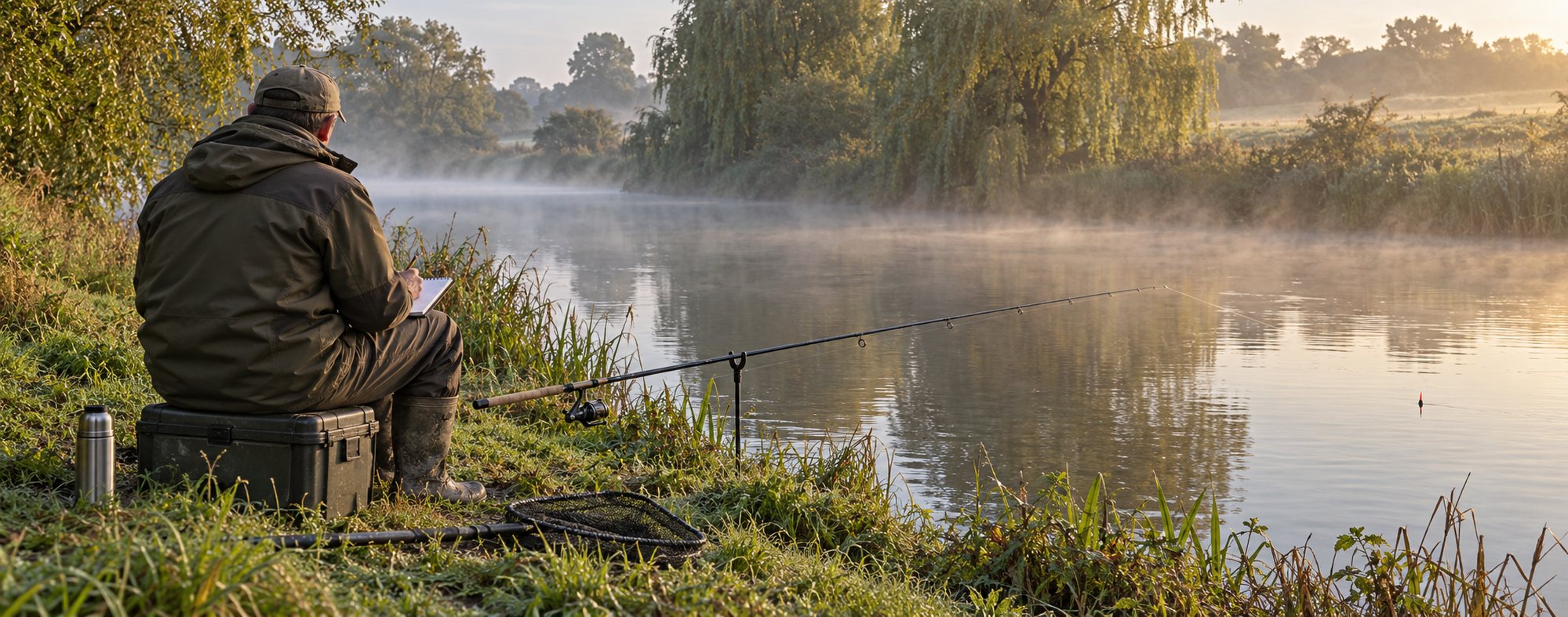
Every angler has a swim that produced once and never again, and a theory about why. Most of those theories are guesses, because a week later nobody remembers whether the wind was south-westerly, whether the river was up, or whether the bites came at dusk or an hour after dark. A fishing diary fixes that. It doesn’t need to be elaborate (a few lines after each session are enough), and it is quicker to keep than it used to be. On the Fishbox fishing app, for example, you can save a catch to the exact water you fished, check the hourly pressure and wind for that spot, and get an estimate of the fish’s length and weight from a single photo before it goes back.
Here is what to record, how to record it without it becoming a chore, and how to use a season of notes to catch more.
Why a Fishing Diary Works
Memory is unreliable. It holds on to the big fish and the memorable blanks and quietly drops everything in between, which is where most of the useful information sits.
General rules are a good starting point. A steady south-westerly, stable pressure and a river dropping and clearing after rain are all well-known signs of a good session, and how weather affects fishing covers them in detail. But every water has its own habits. One stretch of a river can fish best on a falling level with a foot of colour, while a mile upstream the same conditions produce nothing. A diary is how you find out which rules hold on your water, and which don’t.
It also makes you a more deliberate angler. When you know you will write down what you changed and when, you stop changing four things at once and start testing one.
What to Record After Every Session
You don’t need to write an essay. The aim is a consistent set of facts you can compare later. These are the ones worth recording.
The water and the swim
The name of the water, plus the peg number, swim name or a landmark precise enough to find it again (“third swim below the footbridge, inside of the bend”). Add depth, features and anything you noticed: fish topping, birds working, fresh weed, a tree down in the margin.
Times, and when the bites came
Arrival and departure times, and the time of every bite, fish and lost fish. Over a season this is often the most valuable column, because bites on most waters cluster into a predictable window. If you also note the session length, you can compare catch rates fairly rather than just totals.
Weather
Air temperature, cloud cover, wind direction and strength, and barometric pressure in millibars, along with whether it had been rising, falling or steady over the previous 24 hours. The trend matters more than the number, so write “1018 mb and falling” rather than just “1018”.
Water conditions
- Rivers: level compared with normal, whether it was rising or falling, and colour (roughly how many inches you could see into it). If there is a gauge near your stretch, write down the reading. GOV.UK’s river and sea levels service covers England, and Natural Resources Wales and SEPA publish the equivalent for Wales and Scotland. After a season you will know which reading your swim likes.
- Stillwaters: water temperature if you carry a thermometer, colour, weed growth and where fish were showing.
- Sea: state of the tide, how many hours either side of high or low water the fish came, swell and clarity.
Method, rig and bait
The approach (float, feeder, lure, fly), hook size, hooklength, bait and how much feed went in. For lures, colour, size, depth and retrieve. Note what you changed during the session and whether bites followed.
The catch
Species, length or weight, the time, and which rod or bait took it. Note missed bites and lost fish too. They tell you fish were there, which a blank sheet doesn’t.
The blanks
Log every blank in full. It is tempting to skip them, but blank sessions hold much of the information you need. Ten blanks in an easterly wind tell you more than one good day in a westerly.
Paper Notebook or Fishing App?
Both work, and plenty of anglers use both.
A paper diary is cheap, needs no battery, and many anglers enjoy writing it up with a brew at the end of the day. The drawbacks are wet pages, notes written from memory hours later, and no easy way to search ten years of entries for “falling pressure, November”.
A fishing app captures the facts while you are still on the bank. On Fishbox the map covers thousands of UK rivers, canals, reservoirs and sea marks. You can save your own swims, and for each water you can check an hourly forecast with pressure, wind, solunar times and, on the coast, tides, alongside a bite forecast for the days ahead. When you save a catch, the AI catch analysis estimates the fish’s length and weight from the photo, so the record is complete without the fish spending longer out of the water.
A good compromise is to log catches and conditions in the app on the bank, then write a short paragraph at home about what you think happened and what you will try next time.
Get the Fish Back Quickly
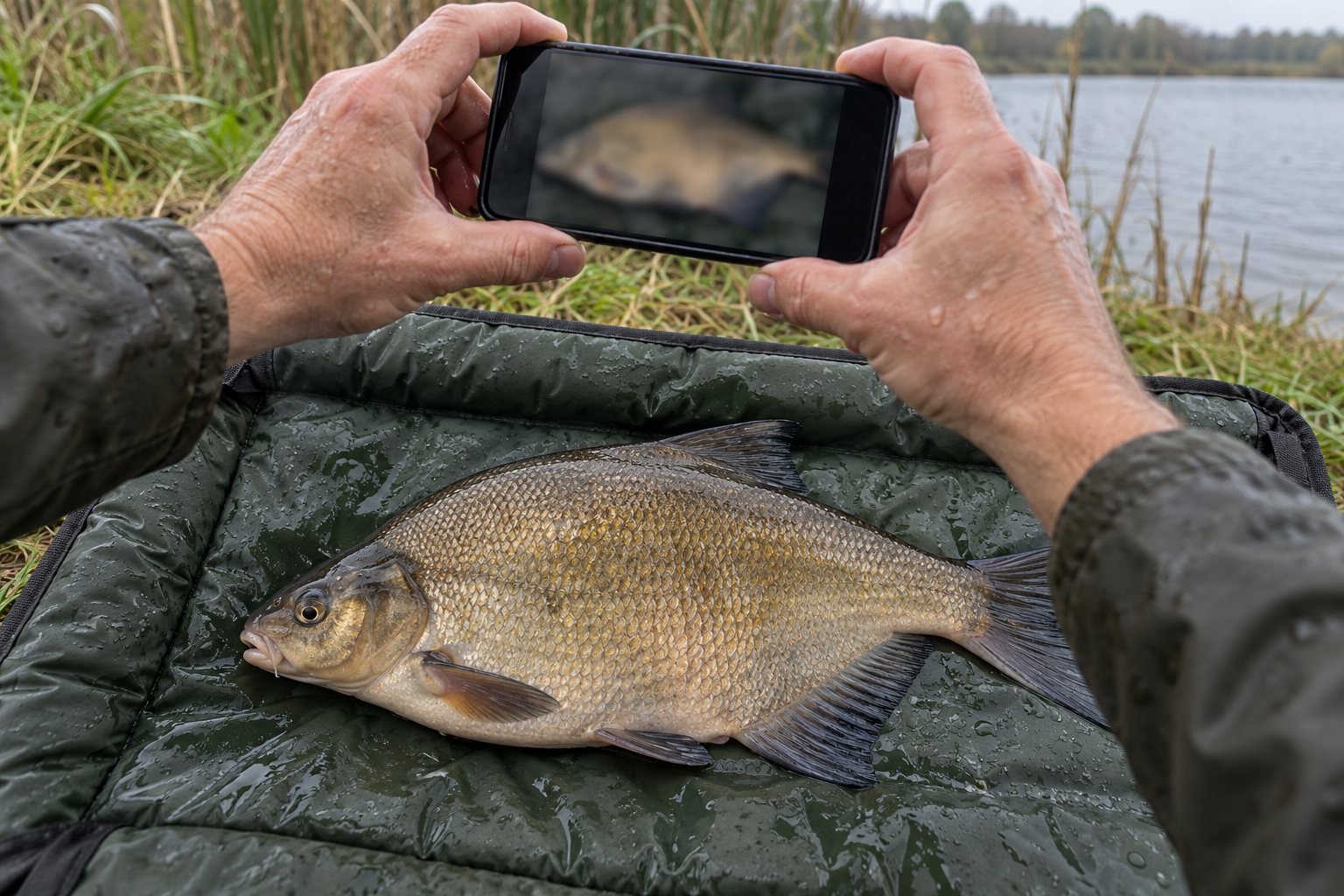
A diary should never cost the fish anything. Keep handling to a minimum: wet hands, a wet unhooking mat, support the fish horizontally, and have the camera ready before you lift it. Our guide on how to unhook and handle fish safely covers the details.
A photo with a length and weight estimate is enough for a diary, and for most fish it is kinder than a full weigh-in. Treat it as an estimate, though. If a fish might be a personal best that you want to be sure of, weigh it in a wet sling on scales you have zeroed with the sling. If it might be a British record, check the British Record (rod caught) Fish Committee’s claim rules before the day comes: they require a proper weighing and witnesses, not a phone estimate.
How to Read Your Diary After a Season
The payoff comes after twenty or thirty sessions, when you have enough entries to sort them. These questions are worth asking:
- Which swims produce in which conditions? You will often find that one swim fishes on a westerly and another only in calm weather.
- What does the pressure trend do on your water? Compare sessions on rising, falling and steady pressure. The general rule may hold, or your water may be the exception.
- Which river levels work? Many anglers find a narrow band on the local gauge, often a river dropping and clearing from a peak, where the fishing switches on.
- When do the bites come? If most of your fish arrive in the last hour of light, arrive later and stay later.
- Which baits work in which months? Line up bait against water temperature or month, and the switch-over points become obvious. The seasonal fishing guide is a good framework to compare your own notes against.
Turn what you find into a handful of simple rules for your water, then use next season to test them. That is the point of the exercise: the diary turns general advice into knowledge about the places you fish.
Sharing Catches Without Giving Away Your Swim
A diary is personal, but a lot of anglers now share selected catches as well. On Fishbox, a catch photo only goes into the regional feed, and into any active challenge it qualifies for, if you choose to share it. Seeing what other anglers are catching locally this week is a useful addition to your own notes.
Share with care, though. Many clubs and syndicates ask members not to name fisheries or post swim locations, and fragile waters suffer when a hotspot is all over social media. Crop out recognisable backgrounds, keep exact marks to yourself, and check your club rules before posting. Your saved swims stay in your own list; nobody needs to know which peg the fish came from.
Frequently Asked Questions
What should I write in a fishing diary?
The water and swim, arrival and departure times, the time of every bite and fish, weather (air temperature, wind direction, cloud and pressure trend), water conditions (river level, colour or water temperature), your method and bait, and the catch. Record blanks in the same detail as good days.
Is a fishing app better than a paper fishing log?
An app is better at capturing facts accurately on the bank, such as location, time, conditions and photos, and it makes old entries easy to search. Paper is cheaper, needs no battery, and many anglers enjoy writing it up. A combination of the two works well.
How accurate are fish weight estimates from a photo?
Good enough for a diary and for tracking how your fish are running over a season, but they are estimates. For a personal best you want to be certain of, weigh the fish in a wet, zeroed sling. Record claims need a proper weighing and witnesses.
How many sessions does it take before a fishing diary shows patterns?
Usually twenty to thirty sessions on the same water, or one full season. Patterns in bite times show up first; patterns linked to pressure and river level take longer because you need sessions in a range of conditions.
Should I record blank sessions?
Yes. Blanks show you which conditions, swims and baits don’t work on your water, which saves you more wasted sessions than any single good day.

Rob Hadley grew up fishing the rivers and drains of the Norfolk Broads, and it was inevitable that pike would become his species of choice. He’s been targeting predators seriously for over 20 years – starting on dead baits, moving through live bait rigs, and eventually landing on lure fishing as his preferred method about eight years ago.
These days he fishes the Broads through winter, travels to Chew Valley Lake each spring for its outsized fish, and spends the warmer months working soft plastics on rivers across the East Midlands for perch and zander. He’s had pike to 31lb and perch to 3lb 9oz, and reckons both records are beatable on the right day with the right set-up.
At The River Bend, Rob writes the predator species guides, lure fishing technique articles, and most of the winter fishing content.
Covers: Pike, perch, zander, lure fishing, winter fishing, predator rigs