In winter, roach are the fish that reward good float fishing. They shoal up in deeper, steadier water, feed in short bursts and respond to the smallest changes in presentation. A size 18 hook and a single caster will often out-fish a bait twice the size.
Some product links in this post are affiliate links to Total Fishing Tackle and Fishing Tackle & Bait. If you buy through one we may earn a commission at no extra cost to you. How that works.
Why winter suits roach
Roach are one of the species that keep feeding in cold water. They gather in tight shoals, so when you find the fish you can catch steadily, and they hold in the steadier water that float tackle handles best. The big autumn fish we covered in autumn roach are still there, but they’re less obliging and need a more refined approach.
Get it right and you can net quality fish on a day when everything else is quiet. Our roach species guide covers the fish itself.
Where to find them
Look for slow, even depth rather than speed. On a river that’s the steady glide below a rapid, the inside of a bend, or a deep slack beside the main flow. On a canal or drain it’s the deeper central channel or any area with a bit of depth change.
Don’t fish the fast water that produced in summer. Roach in winter sit where they can hold station without effort, and one foot of extra depth or a bank of slow water can be the difference between nothing and a bite a trot.
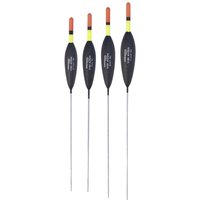
Float choice
Which float depends on the water. On steady, shallow-to-medium rivers a stick float or Avon works well, and our trotting guide covers the method in detail. A Korum Fineliner stick float is a good fine option for a gentle glide, while the Drennan Visi Avon suits slightly deeper, steadier runs where you want more stability.
On still or very slow water a small waggler like the Korum Classic Waggler lets you fish at distance without a heavy cast. Whichever you choose, keep the float as light as the conditions allow. Our float guide explains what each type does.
Line, hooks and hooklength
Fish lighter than you think you need to. A main line around 4lb such as Guru N-Gauge Monofilament 4lb is plenty for roach, and a hooklength of 0.10mm to 0.12mm gives the presentation cold fish want. In clear water, the finer end of that range is worth the occasional break.
For hooks, size 16 to 18 covers most winter roach fishing. A small barbless pattern like the Guru F1 eyed barbless is gentle on the fish and easy to unhook with cold fingers. Check our hook sizes guide if you’re unsure.

Baits and feeding
Maggots, casters, hemp and bread punch are the staples. Casters are often the better hookbait in winter because they’re less likely to attract tiny fish, and hemp keeps a swim going without filling the fish up. Our maggots and casters guide covers keeping them in good order.
Feed very lightly. A small pinch of hemp and a few casters or maggots every trot is enough. Over-feeding can kill a swim in cold water, and it’s much easier to add more than to take it away. Our best bait for roach guide covers the options in detail.
| Water | Float | Hookbait | Feed |
|---|---|---|---|
| Slow, clear river | Stick or Avon | Single caster or maggot | Pinch of hemp and casters each trot |
| Deeper, steadier glide | Avon | Caster or bread punch | Small, regular balls of feed |
| Canal or drain | Light waggler or stick | Maggot or caster | Little and often, loose |
Rod and reel
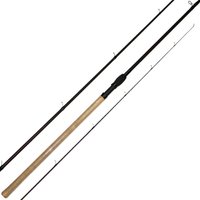
A 13ft float rod gives control of the line at distance and cushions fine hooklengths when a bigger roach or a surprise chub takes. The Drennan Red Range 13ft float rod is a reasonable general choice for rivers and slow canals. Match it with a smooth, free-running reel such as the Daiwa Ninja Match 3012A, and set the clutch lightly so a lunge doesn’t snap fine line.
Reading the bites
Winter roach bites are often tiny: a slight dip, a pause in the float’s progress or a hint of a lift. Strike at any change rather than waiting for the float to disappear. A gentle lift of the rod is plenty, since a hard strike with fine line and a small hook either pulls free or breaks.
If bites dry up after a good start, change something small rather than something big. Try an inch deeper or shallower, or swap caster for maggot, before you move swim.
Questions anglers ask
What size hook for winter roach?
Size 16 to 18 is the usual range. Go down to an 18 if bites are shy and the water is clear, and use a 16 if you’re fishing bread punch or expecting a bonus chub.
What is the best float for winter roach on a river?
A small stick float or Avon, chosen to match the depth and pace of the swim. The aim is for the float to ride just slower than the surface flow so the bait leads the way.
Should I use groundbait for winter roach?
Usually not on rivers, where hemp and casters loose-fed are enough. In still or very slow water a little fine, cold-water groundbait can hold fish, but keep it sparing. Our groundbait guide covers when it helps.

Dan Whitfield grew up in Liverpool and started fishing aged seven on the Leeds and Liverpool Canal at the end of his road. He never really stopped. He spent his twenties and thirties on the match circuit – club level rather than national – before deciding he’d rather catch one decent fish than a net of small ones.
These days he mostly fishes the River Dee for barbel and chub (barbel personal best 14lb 2oz, from the Trent on a trip south), the Leeds and Liverpool Canal for roach and skimmers in winter, and the occasional gravel pit when tench are spawning and the surface fishing is too good to miss. He’s a former club secretary and coaches children on Saturday mornings at a junior section of a Liverpool angling club, where most sessions start with a float, a tin of maggots and a lot of patience.
At The River Bend, Dan writes the coarse species guides, river fishing technique articles, and the match and pole content.
Covers: Barbel, bream, roach, tench, carp (coarse context), river fishing, canal fishing, feeder, float, match/pole