The double Palomar knot is a variation on the standard Palomar – the same basic tying method, but with the line doubled through the hook eye before you start, rather than a single strand. That doubling adds meaningful extra strength and abrasion resistance, at the cost of being a little fiddlier to tie, especially with thicker lines or smaller hook eyes.
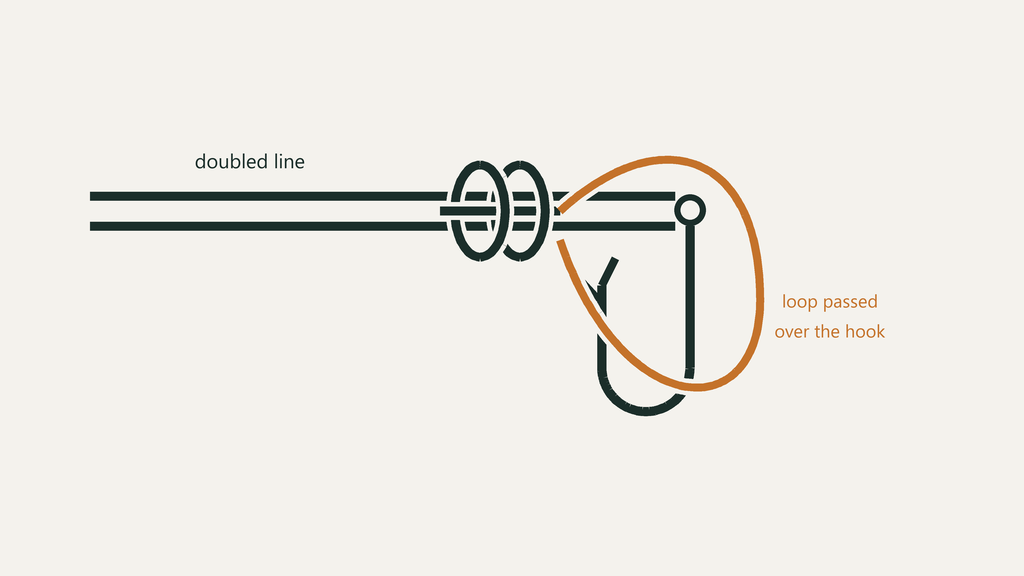
How It Differs From a Standard Palomar Knot
Our main Palomar knot guide covers the standard version, which is already one of the strongest and most reliable hook knots available. The double Palomar takes the same basic loop-and-cinch method but starts from a longer doubled section of line, meaning two strands run through the hook eye and through the finished knot rather than one.
The result is a knot with more material bearing the load, which translates into better resistance to abrasion against a hook eye or ring, and a small but real increase in breaking strain retention compared to a single-strand Palomar tied in the same line.
When to Use It
The double Palomar earns its place in a few specific situations rather than as an everyday replacement for the standard knot:
- Heavier lines and leaders, where the extra bulk of doubling is manageable and the extra strength genuinely matters – leader-to-hook connections on stronger tackle, for example.
- PVA bag and stick rigs, where a hooklink needs to survive repeated contact with lead and lead clips without the knot being the weak point.
- Abrasion-heavy situations – fishing tight to snags, gravel, or structure where a hook knot takes more wear than usual.
For fine lines and small hooks (light float fishing, delicate presentations), the standard single Palomar is usually the better choice – doubling fine line through a small eye can be genuinely awkward to tie cleanly, and the strength benefit matters less when the line itself is the limiting factor.
Step by Step
- Double roughly 15-20cm of line back on itself to create a loop, giving you a doubled section to work with rather than a single strand.
- Pass the doubled loop through the hook eye, leaving enough doubled line on the working side to tie the knot comfortably.
- Tie a simple overhand knot with the doubled line, letting the hook hang loose in the resulting loop – keep this loose and avoid twisting the two strands as you form it.
- Pass the hook (or hooked lure) through the big loop created by the overhand knot, exactly as with a standard Palomar.
- Moisten the knot and pull steadily on both the main line and tag end together to cinch it down evenly, checking the doubled strands sit flat and parallel rather than crossed.
- Trim the tag end close, leaving 3-5mm.
Common Mistakes
The most common issue is letting the doubled strands twist around each other rather than sitting flat and parallel – this creates an uneven load and a knot that can fail well below its potential strength. Take a moment before the final cinch to straighten both strands out, exactly as you would check on a standard Palomar, only doubly important here since there’s more line to potentially cross.
The other common problem is simply forcing a doubled loop through a hook eye that’s too small for it comfortably – if the eye is small and the line reasonably thick, doubling can become impractical. In that situation, a standard single Palomar or an alternative knot like the improved clinch knot is the more sensible choice.
Testing the Knot
As with any hook knot, pull-test it before fishing – a firm, steady pull directly in line with the hook shank, checking the knot holds and the strands haven’t slipped or crossed. A knot that survives a firm pull-test on the bank is far more likely to hold under the pressure of a fighting fish than one tied and trusted without checking.