If you drew a rough triangle between Stirling, Kinross and Dunkeld, you would enclose more good stillwater trout fishing than most countries manage in total. It is the part of Scotland I send people to first, not because the fish are the biggest but because the standard is high and the venues are close enough together that a bad forecast does not ruin a trip. You reshuffle and fish somewhere else an hour up the road.
What makes the area work is variety in the type of fishing rather than just the number of waters. Within that triangle you have a boat-only wild brown trout loch with a fishing tradition going back generations, a weekly-stocked rainbow fishery built around dry fly and buzzer work, a members-only wild water that has deliberately turned its back on day tickets, and a small estate loch that fishes far above its size. Those are four genuinely different days out.
The four venues worth knowing
Loch Leven at Kinross is the historic one, and it is still boat-only and fly-only for its wild browns. If you have never fished loch style properly, this is where you learn what it is supposed to feel like. The season runs April to early October.
Lake of Menteith sits twenty minutes west of Stirling and is the one I recommend to anglers who want their day to be about catching. It is boat fishing again, stocked weekly, and the dry fly and buzzer fishing when conditions line up is as good as anywhere in Scotland.
Carron Valley, between Denny and Fintry, is the awkward one to plan around because it went to private membership in 2021 and no longer sells day rods. I still mention it because people arrive expecting to buy a ticket and cannot. Worth knowing before you drive there.
Butterstone, near Dunkeld, is the smallest of the four and fishes for rainbow, blue and brown trout from both boat and bank. Access is through the Dunkeld and Birnam Angling Association rather than over the counter, so it needs arranging in advance too.
How to pick between them
My honest rule of thumb: if you want to catch fish and enjoy the day, Menteith. If you want to fish somewhere that matters and are prepared to work harder for fewer, better fish, Leven. If you are the kind of angler who wants variety in a small space and does not mind sorting membership out first, Butterstone.
The wind decides more than any of this. All four are open water where the drift dictates the day, and a flat calm in high summer will make every one of them hard. I would rather have a decent ripple and cloud than a beautiful still morning, and I have driven past a mirror-calm loch to fish somewhere rougher more than once.
Tackle, honestly
A 9ft or 10ft rod for a #6 or #7 line covers all four. On the stocked waters a floating line and a team of buzzers under an indicator will out-fish almost anything else through the middle of the season, and on the wild waters traditional loch style with a team of three wets fished on a short line off the drift is still the method that works. If you are new to it, our beginner’s guide to fly fishing for trout covers the basics before you commit to a boat.
Bring more layers than you think. Boat fishing in Scotland is a stationary activity in moving air, and I have been colder in June on Leven than in November on a river.
Before you go
Two of these four cannot be fished on impulse. Carron Valley is members only, and Butterstone runs through the DBAA. Menteith and Leven both take bookings and both are popular enough at weekends that turning up hopefully is a gamble. Book.
Scotland has no rod licence requirement of the sort you need in England and Wales, but you still need the fishery’s permission in the form of a permit or boat booking. If that distinction is new to you, our guide to loch fishing in Scotland sets out how the permit system actually works.
Over the next few days I will go through each of these venues properly, along with a few from the south and the Highlands. The individual profiles are where the useful detail lives.

Gear that fits this
Some options that match this approach, grouped by type.
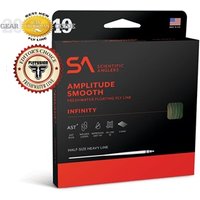
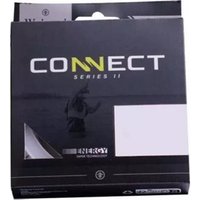
Fly lines worth adding: Airflo Superflo Mini Tip Fly Line 3' Fast Int. Tip WF8, Scientific Anglers Amplitude Smooth Infinity Optic Weight Forward Fly and Wychwood Connect Series 2 Ghost Intermediate Fly Line #6.
On the leaders and tippet side, Airflo Tactical Polyleader Ultimate Dry 8ft Floating, Orvis Mirage Flurocarbon Tippet 1x 11.8lb 30m and Maxima Clear 100m Line 5 lb.
Reels: Guideline AURA Titan Fly Reel #34, Guideline Fario Fly Reel Champagne ±4 and Wychwood Truefly SLA MKII Silver Fly Fishing Reel #5/6.
For rods, Scott Fly Rod Co Centric Series Fly Rod 9'6'' #6 4-pc, Wychwood Truefly FA Fly Rod 10ft #7 and Guideline Elevation Single Handed Fly Rod 9' #5 are all worth a look.

Sarah Marsh came to fly fishing through her father, who kept a rod on a small syndicate water in Devon. She spent her teens fishing stocked reservoirs and gradually worked her way toward wild fish on moving water – first on rain-fed freestone rivers in Wales, then on the Hampshire chalk streams she now considers home water.
She holds a level 2 APGAI fly casting qualification and guides informally on the River Test and, from June to September, on a private beat on the River Tay for Atlantic salmon. Her personal best brown trout came from the Itchen at 4lb 1oz; she’d sooner not talk about the salmon that came off at the net last August.
At The River Bend, Sarah writes the game fish species guides, fly fishing technique articles, and the legal content covering trout and salmon regulations.
Covers: Brown trout, rainbow trout, sea trout, Atlantic salmon, fly fishing, chalk streams, Scottish rivers, close season and regulation articles