Euro nymphing, also called tight line or contact nymphing, has probably changed British river fly fishing more than anything else in the last twenty years. It came out of competition fishing on the continent and it catches a lot of fish, particularly trout and grayling in the sort of water we have here.
It also has a reputation for being technical and gear-obsessed, which puts people off. The core idea is genuinely simple.
The idea in one paragraph
Instead of casting a fly line and mending it to control the drift, you use a very long, very light leader and heavily weighted flies, and you keep the leader almost entirely off the water. The flies sink fast, you lead them downstream at the speed of the current with the rod tip, and you stay in direct contact so you feel the take rather than seeing an indicator move.
That is it. No fly line on the water means no drag, so the flies drift naturally. Direct contact means you detect takes you would otherwise never know about.
Why it works so well
Trout and grayling in rivers take the vast majority of their food subsurface, close to the bottom. Traditional methods struggle to get a fly down and keep it there without drag.
Euro nymphing solves both at once. The flies get down fast and stay in the zone for the whole drift. And because there is no slack, you register takes that a floating line would absorb entirely.
The commonly quoted figure is that anglers detect only a fraction of the takes they get on a conventional nymph setup. Whether or not the exact number is right, anyone who switches notices the difference immediately.
The kit, without the nonsense
A longer, softer rod helps. Ten foot for a three or four weight is the standard, and the extra length is about reach and control rather than casting distance. You can start with a nine foot five weight and it will work.
The leader is where the method lives. A long butt section, a sighter of coloured monofilament so you can see the drift, and a fine tippet. You can buy them ready made or tie your own.
Flies need weight. Tungsten beads, jig hooks, slim profiles that cut through the water. Carry the same patterns in three weights so you can adjust to the depth and speed of the run rather than changing flies.
A reel matters very little. It holds line and balances the rod.
Making a drift
Cast, or more accurately flick, the flies upstream and slightly across, not far. Ten to twenty feet is normal. This is close range fishing.
Let them sink, then follow them downstream with the rod tip, keeping the sighter under gentle tension and just off the water. You are leading the flies, not dragging them, and you want them travelling at the pace of the current near the bottom, which is slower than the surface.
At the end of the drift, let them swing up and hold for a second, because takes often come as the flies lift.
Detecting the take
Anything unusual is a take. The sighter stopping, twitching, moving upstream, straightening slightly. You will not always feel it in your hand.
Lift at everything. The cost of a false strike is nothing. Beginners typically strike at about a third of the takes they get, and the way to improve is to lift more often, not less.
Depth is the main variable
If you are not catching, the answer is nearly always weight. Too light and the flies never reach the fish. Too heavy and they snag constantly.
The rule of thumb is that you should touch the bottom occasionally, a light tick every few drifts. Never touching means go heavier. Constantly stuck means go lighter or shorten the drift.
Where it fits and where it does not
Euro nymphing is a close range method for moving water of moderate depth. It is superb in the pocket water, runs and riffles that make up most of a freestone river.
It is not the method for a wide slow pool, for fishing at distance, or for rising fish. It complements the dry fly rather than replacing it.
Learning it in autumn
Autumn is a good time to start because grayling are obliging, they hold in exactly the water this method suits, and they will keep giving you takes while you work out your depth and your contact. Find a knee-deep gravel run, tie on two weighted nymphs, and spend a session doing nothing else.


Gear that fits this
Some options that match this approach, grouped by type.
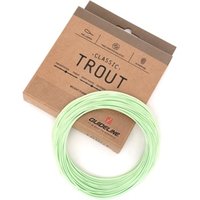
Fly lines worth adding: Guideline Experience+ WF #5, Sharpes of Aberdeen Ajax Weight Forward Floating Fly Line #8 and Guideline Classic Trout Sink 3 Fly Line #8.
On the leaders and tippet side, Airflo Euro Nymph Rollers 1.9mm (Pack of 10), Airflo Sightfree Supple Fluorocarbon 100m 4.6lb and Orvis Mirage Flurocarbon Tippet 3x 8.4lb 30m.
Reels: Lamson Remix S-Series Smoke Fly Reel, Lamson Remix S-Series Smoke 3 Pack Fly Reel and Guideline Aeon Fly Reel- Black/Silver #11/13.
For rods, Guideline LPX Tactical Single Handed Fly Rod 9' #5, Shakespeare Oracle 2 EXP Fly Rod 10ft #7 6pc and Guideline Rivolt Single Handed Fly Rod #6 10' are all worth a look.

Sarah Marsh came to fly fishing through her father, who kept a rod on a small syndicate water in Devon. She spent her teens fishing stocked reservoirs and gradually worked her way toward wild fish on moving water – first on rain-fed freestone rivers in Wales, then on the Hampshire chalk streams she now considers home water.
She holds a level 2 APGAI fly casting qualification and guides informally on the River Test and, from June to September, on a private beat on the River Tay for Atlantic salmon. Her personal best brown trout came from the Itchen at 4lb 1oz; she’d sooner not talk about the salmon that came off at the net last August.
At The River Bend, Sarah writes the game fish species guides, fly fishing technique articles, and the legal content covering trout and salmon regulations.
Covers: Brown trout, rainbow trout, sea trout, Atlantic salmon, fly fishing, chalk streams, Scottish rivers, close season and regulation articles