Plenty of winter sessions end because the angler is cold, not because the fish stopped biting. The right winter fishing clothing lets you stay put through the best spell of the day.
Some product links in this post are affiliate links to Total Fishing Tackle and Fishing Tackle & Bait. If you buy through one we may earn a commission at no extra cost to you. How that works.
Why you get cold on the bank
Fishing is mostly standing or sitting still. You make little heat, you get windchill from open banks and the dampness from the water finds its way into everything. Hands, feet and your core go first, and once they do, concentration drops and sessions finish early.
Our autumn layering guide covers the principles for milder weather. Winter takes the same system and adds more insulation, better hands and feet and a plan for hot drinks.
The layering system
Three layers work for almost everyone. A base layer next to the skin should wick moisture, not cotton. A mid layer traps heat, and a fleece such as the Navitas Atlas Fleece does this well. An outer layer must block wind and rain, and it should be big enough to wear over the others without compressing them.
For the outer layer, a one-piece or two-piece suit like the Prologic Max5 Thermo Comfort suit is a practical option for sitting sessions, while insulated trousers such as the Trakker Rip Stop Thermal Combats suit sessions in dry, cold weather. Fit matters: buy a size that lets you add layers beneath.

Feet
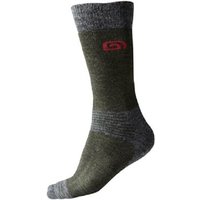
Cold feet are a common reason to pack up early. Wear a good pair of thermal socks and keep a spare pair in the bag. Trakker Merino Thermal Socks are a sensible choice, since merino stays warm when slightly damp.
Pick boots or waders with room for a thick sock but not so much that your foot slides. A tight boot cuts circulation and makes feet colder. If you sit for long stretches, put a foam mat or a piece of insulation under your feet, because the ground draws heat out.
Hands
You need dexterity for knots, but you also need warm hands. Fingerless gloves are a start, though a pair of thicker gloves for the waiting between bites helps. The Trakker Polar Fleece Gloves are warm and light, while the Fox Rage Thermal Camo Gloves are another option with a bit more grip.
Take them off to tie knots, then put them back on. A small towel or hand warmers in a pocket give your hands a way to recover between casts. Cold, wet hands also make unhooking fish harder, so keep a dry towel handy. Our unhooking guide covers handling.
Head and neck
A warm hat such as the Navitas Ski Bobble Hat and a neck warmer or scarf change how warm you feel overall. If you’re fishing into the dark, a head torch worn over a hat is fine, and our headtorch guide covers choosing one.
Hot drinks
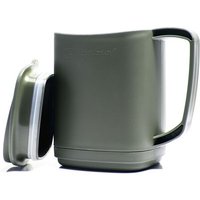
A hot drink is the quickest way to feel better. A vacuum mug like the Ridgemonkey Thermo Mug keeps tea hot for a long time, and a small kettle and stove, such as the Wychwood 2 Cup Carpers Kettle and the Fox Compact Stove 3000, let you brew on the bank for longer sessions. Take care with stoves: keep them on stable ground away from your tackle and never use one in a shelter without ventilation.
| Part of body | What to wear | Example |
|---|---|---|
| Core | Wicking base layer, fleece, windproof outer | Fleece plus waterproof suit |
| Legs | Insulated or thermal trousers | Thermal combats |
| Feet | Thermal socks, roomy boots | Merino thermal socks |
| Hands | Warm gloves you can take off quickly | Fleece or thermal gloves |
| Head | Hat, neck warmer | Bobble hat |
A seat helps
Sitting on a cold, damp bank draws heat from your body. A chair like the Fox Duralite lifts you off the ground and gives you a comfortable base for a longer session. If you roam, a small folding stool or a rucksack seat is a lighter option.
Questions anglers ask
What is the best thing to wear fishing in winter?
Layers: a wicking base layer, a fleece mid layer and a waterproof, windproof outer. Add thermal socks, warm gloves and a hat.
How do I keep my hands warm while fishing?
Wear gloves between bites, take them off only for knots and keep a dry towel handy. Hand warmers in a pocket help too.
Why do my feet get so cold when fishing?
You are standing still on cold ground. Thick thermal socks, boots with room to spare and something insulating under your feet make the biggest difference.

Dan Whitfield grew up in Liverpool and started fishing aged seven on the Leeds and Liverpool Canal at the end of his road. He never really stopped. He spent his twenties and thirties on the match circuit – club level rather than national – before deciding he’d rather catch one decent fish than a net of small ones.
These days he mostly fishes the River Dee for barbel and chub (barbel personal best 14lb 2oz, from the Trent on a trip south), the Leeds and Liverpool Canal for roach and skimmers in winter, and the occasional gravel pit when tench are spawning and the surface fishing is too good to miss. He’s a former club secretary and coaches children on Saturday mornings at a junior section of a Liverpool angling club, where most sessions start with a float, a tin of maggots and a lot of patience.
At The River Bend, Dan writes the coarse species guides, river fishing technique articles, and the match and pole content.
Covers: Barbel, bream, roach, tench, carp (coarse context), river fishing, canal fishing, feeder, float, match/pole