If one river fish can be relied on to feed in the cold, it is the chub. They slow down like everything else, but they don’t stop, and a good winter chub will still take a decent bait at a time when roach are fussy and barbel have gone quiet.
Some product links in this post are affiliate links to Total Fishing Tackle and Fishing Tackle & Bait. If you buy through one we may earn a commission at no extra cost to you. How that works.
Why chub are a winter fish
Chub are tolerant of cold and are opportunistic feeders, which means they will take a sizeable bait if it lands in front of them. They also hold in slower, predictable places in winter, so you can find them without much guesswork. Our autumn chub post covers the run-up, and the chub species guide covers the fish itself.
The same fish that tore into a floating bait in July now sits in a slack with its mouth barely open. The trick is to put something smelly or easy in front of it and wait.
Where to find them
Look at the slower water. The inside of bends, the slack behind a bridge pillar, deep pools below a weir and the tail of a snag are all classic winter spots. Chub like cover, so overhanging trees, undercut banks and weed rafts are worth fishing.
In low, clear water they spook easily, so keep back, stay low and stay quiet. In coloured water after rain they are bolder and will often come closer to the bank. Our post-flood river guide covers reading that water.

Cheese paste or bread?
This depends on the water. In coloured or rising water, a strongly scented bait like cheese paste carries well and gets noticed. In low, cold and clear water, bread flake is often the better choice because it is natural and doesn’t scare shy fish.
Make your own cheese paste or buy a ready-made soak and hookbait. The Dynamite Baits Big Fish River Bait Soak in Cheese and Garlic is one option for adding scent to your offering, and the Big Fish River Busters hookbaits in Cheese and Garlic give you a ready-made hookbait. Our pastes and dough baits guide explains how to make and keep them.
Carry both bread and cheese and change if bites don’t come within the first half hour. That one swap is often all a stuck session needs.
A small feeder rig
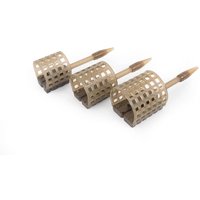
A small open-end or cage feeder is a good way to put bait near the fish without over-feeding. Fill it with a little crumb or groundbait and a few chopped pieces of your hookbait, and cast to the edge of a slack or seam. The Preston ICS Cage Feeder, small 20g is a sensible size for most winter river work.
Use a hooklength of 8 to 12 inches with a size 10 hook such as the Guru QM1 barbless, and a hooklength strong enough for a decent chub, around 4lb to 6lb. Cast, let it settle and leave it for 15 to 20 minutes, then recast. Our feeder fishing guide explains the rig in more detail.
| Water | Bait | Method |
|---|---|---|
| Coloured and rising | Cheese paste | Small feeder, static |
| Low and clear | Bread flake | Light feeder or freelined |
| Cold, slow pool | Cheese paste or meat | Static, light feed |
Rod and reel
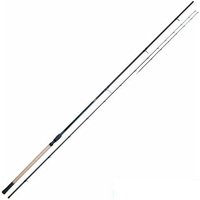
A medium feeder rod handles the casting and a bold chub bite. The Drennan Vertex Medium Feeder Rod 11ft suits most river work, and the Daiwa Ninja Specialist 2500A is a reasonable reel to match. Set the clutch so a good fish can take line without breaking the hooklength.
Approach and patience
Winter chub fishing is a roving game. Spend 20 to 30 minutes in each spot and move if nothing happens. The fish that are there will usually take within that time, and the ones that aren’t won’t be tempted by waiting longer.
Keep noise down, wear dull clothing and avoid standing on the skyline. Chub are shy in clear water, and half of winter success is how you approach the bank.
Questions anglers ask
What is the best bait for chub in winter?
Cheese paste in coloured water and bread flake in clear water are the two most reliable options. Meat and a small lobworm are good alternatives. Our best bait for chub guide has more.
What size hook for chub in winter?
A size 10 or 12 for paste and bread flake. Go bigger if you’re using a large bait like luncheon meat.
Do chub feed in freezing weather?
They feed less, but they’re often still catchable. Look for the slowest, deepest water and give the bait time.

Dan Whitfield grew up in Liverpool and started fishing aged seven on the Leeds and Liverpool Canal at the end of his road. He never really stopped. He spent his twenties and thirties on the match circuit – club level rather than national – before deciding he’d rather catch one decent fish than a net of small ones.
These days he mostly fishes the River Dee for barbel and chub (barbel personal best 14lb 2oz, from the Trent on a trip south), the Leeds and Liverpool Canal for roach and skimmers in winter, and the occasional gravel pit when tench are spawning and the surface fishing is too good to miss. He’s a former club secretary and coaches children on Saturday mornings at a junior section of a Liverpool angling club, where most sessions start with a float, a tin of maggots and a lot of patience.
At The River Bend, Dan writes the coarse species guides, river fishing technique articles, and the match and pole content.
Covers: Barbel, bream, roach, tench, carp (coarse context), river fishing, canal fishing, feeder, float, match/pole