The River Thames is the most accessible major coarse fishing river in England. It runs through the centre of London, through the commuter belt of Surrey and Berkshire, through the market towns of Oxfordshire and past the meadows of the upper river in Gloucestershire – and it holds good fish throughout. For anyone within a reasonable distance of its 215-mile length, the Thames represents an enormous resource that most anglers have barely scratched.
This guide covers the Thames as a fishing river: the species you will encounter from different sections, how access works, the best methods for the species you are targeting, and the best stretches to fish across different sections of the river.
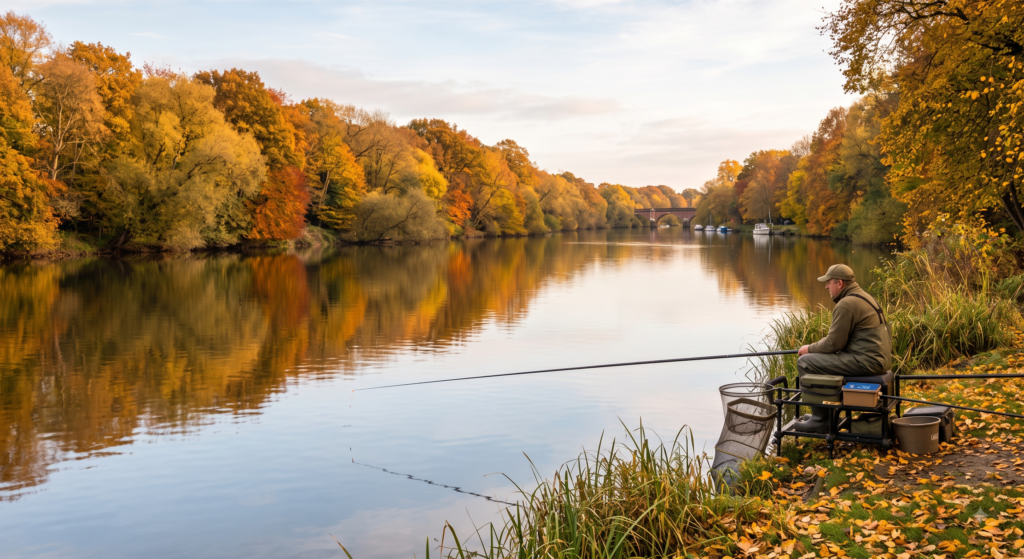
Thames Fishing Access
Most of the Thames from Teddington upstream is managed by the Environment Agency and is largely free to fish from the towpath with a valid rod licence. No day ticket is required for the majority of river bank fishing. This makes it exceptional value compared to commercial waters, club waters, and most other river systems.
A few key points on access:
- Rod licence required – An Environment Agency freshwater rod licence is required for anyone aged 13+. See our fishing licence guide for current prices and how to buy.
- Below Teddington – The tidal Thames below Teddington weir is tidal and managed differently. Fishing is possible but the conditions (tidal surge, salt influence, boat traffic) require different techniques and species expectations. Bass and eels are the target here more than coarse fish.
- River close season – The statutory coarse fish close season (15 March to 15 June) applies to the Thames as a river. No coarse fishing during this period.
- Boat traffic – The Thames carries significant commercial and leisure traffic in summer, particularly around lock cuts and popular stretches near towns. This affects swim choice and comfort. Autumn and winter are quieter.
Thames Species
The Thames is a multi-species river. The character of the catch depends heavily on which section you are fishing.
Chub
Chub are the most consistent daytime catch on the middle and upper Thames. They are found throughout the river wherever there are bankside trees, overhanging branches, or weed beds. The Thames produces large chub – 5lb+ fish are caught regularly, and the river has a reputation for producing double-figure personal bests for anglers who target them specifically.
Chub respond well to bread flake, cheese paste, crayfish tails (invasive signal crayfish are present throughout the Thames and legal to use as bait), and large pellets. Lure fishing with soft plastics and small plugs is increasingly effective. Autumn and winter produce the best sport.
Barbel
Thames barbel have grown significantly in weight over the last two decades, driven largely by the crayfish population providing year-round high-protein food. Fish to 15lb+ are caught from prime Thames stretches. The river between Shepperton and Reading is particularly noted for barbel. The faster, gravel-bedded stretches below weirs and in deeper bends hold the best fish.
Standard barbel approaches: pellet feeder or running ledger with a boilie or pellet hookbait, presented in or close to flow on a gravel bottom. Evening and night fishing produces the biggest fish. Autumn (September to November) is the peak season.
Perch
Thames perch have recovered strongly from the disease outbreaks of previous decades and the river now holds good populations throughout. Fish to 3lb and beyond are caught regularly from weir pools, bridge supports, lock approaches, and riverside marina structures. The Twickenham to Kingston stretch is accessible and productive.
Drop shot fishing around any hard structure is the most consistent method. See our perch fishing guide and drop shot fishing guide for full method detail.
Pike
The Thames holds large pike, particularly in the deeper sections and in the quieter backwaters off the main river. Weir pools are the most reliable spots for big fish, concentrating prey species through the winter months when pike are most active and catchable. Fish to 30lb have been taken from Thames stretches.
Deadbaiting with half-mackerel, sardine, or smelt on a running pike ledger is the standard winter method. Lure fishing with large rubber lures or jerkbaits is effective from autumn through to February when the fish are actively chasing prey.
Bream and Roach
Shoal fish – bream, roach, and hybrids – are present throughout the Thames and represent good sport for the float and feeder angler. Summer and early autumn produce the best bream fishing on long-trotted float or method feeder. Winter roach fishing on the Thames, particularly on slower stretches and in the deeper holes off the main current, can be outstanding on fine float tackle with maggots.
Thames by Section
Upper Thames (Lechlade to Oxford)
The upper Thames is a different river to the lower reaches – narrower, shallower, cleaner, and with a more intimate feel. Chub are the dominant species here, with good roach, dace, and pike. Less pressure than the lower river. Many stretches require club membership through Oxfordshire clubs to fish legally.
Middle Thames (Oxford to Reading)
The river widens and deepens in this section. Barbel begin to feature more prominently; bream shoals are larger. The weir pools at Abingdon, Goring, and Pangbourne have reputations for big perch and pike. The towpath provides long stretches of free access.
Middle Thames (Reading to Shepperton)
The premium barbel and chub section. Weed beds in summer, gravel runs, and the character of the water produce ideal conditions for large specimens. Marlow, Maidenhead, and Windsor stretches are accessible and well-known to southern England barbel anglers. Popular and fished hard in season.
Lower Thames (Twickenham to Teddington)
The most accessible urban Thames fishing. This stretch is popular for perch, chub, and pike. The Twickenham to Kingston towpath is easily reached by public transport, free to fish, and produces fish throughout the year. Bridge supports and lock approaches around Teddington weir hold perch and pike. The weir pool itself is one of the most-fished spots on the river.
Best Thames Swims
Teddington Weir. The most famous Thames fishing location. The weir pool below Teddington lock holds perch, pike, bream, chub, and barbel. Subject to heavy pressure on weekends but produces fish consistently. Weir pools concentrate oxygenated water and prey fish, and Teddington is the transition point between the tidal and non-tidal river.
Shepperton to Walton. A stretch consistently mentioned by Thames barbel anglers. Gravel runs, weed beds in summer, and the deeper character of the river in this section all contribute to good barbel and chub fishing. Day ticket stretches exist alongside free towpath access.
Marlow Weir. Marlow is one of the prettier Thames towns and the weir and lock approaches hold quality fish. Good perch fishing around the weir structure; barbel and chub in the runs below.
Goring and Streatley. A narrowing of the river creates faster water and gravel beds – ideal barbel habitat. Some of the biggest Thames barbel have been taken from this section over the years.
Thames Fishing in Each Season
Autumn (September to November) is the most productive season for most Thames species. Barbel feed heavily into October and November; perch and pike switch on as water cools; chub become catchable through the day rather than just at first light. This is the season to prioritise.
Winter (December to February) produces the biggest pike and good chub and roach. Dawn and dusk fishing produces barbel even in the coldest months if you pick a mild spell. The river is quieter, access is easier, and the pressure of summer boat traffic is gone.
Spring (March to June) includes the close season (15 March to 15 June) on the river. Before the close season starts, barbel and chub feed actively. After 16 June, the river opens again with warmer water and feeding fish.
Summer (June to August) sees heavy boat traffic, algae blooms on some stretches, and warm water temperatures that push the best fishing to dawn, dusk, and overnight.
Frequently Asked Questions
Is fishing on the Thames free?
Most towpath fishing on the Thames from Teddington upstream is free with a valid Environment Agency rod licence. No day ticket is required for the majority of bank fishing on the non-tidal Thames. Some stretches are managed by fishing clubs and require membership. The Canal and River Trust manages some Thames-adjacent waters that require their own licence.
What fish are in the River Thames?
The Thames holds chub, barbel, perch, pike, bream, roach, dace, carp, tench, and eel throughout its length. Below Teddington in the tidal reach, bass, flounder, and mullet are also caught. The species mix changes by section – upper river is chub and dace dominated; middle and lower Thames add barbel and larger perch.
Do I need a licence to fish the River Thames?
Yes. All freshwater fishing in England requires a valid Environment Agency rod licence for anyone aged 13 and over. See our fishing licence guide.
When is the best time to fish the River Thames?
Autumn (September to November) is the most productive overall season. September to November for barbel and perch; December to February for pike and winter roach; the immediate post-close season window in June-July for chub and barbel before summer temperatures peak.
Can you fish the Thames at night?
Yes, on most free stretches of the Thames. Night fishing produces the biggest barbel from the Thames, particularly on summer and early autumn nights when water temperatures drop and fish feed more boldly after dark. Some club stretches have restrictions on overnight fishing – check before setting up camp.