The River Severn is the longest river in Great Britain at around 220 miles from its source on Plynlimon in the Cambrian Mountains of Wales to its estuary at the Severn bore. As a fishing river, it is one of the most productive and accessible in England, running through Welshpool, Shrewsbury, Bridgnorth, Bewdley, Worcester, Tewkesbury, and Gloucester, with club-controlled fishing available along much of its length.
The Severn holds a wide range of species – barbel, chub, pike, perch, roach, bream, dace, and increasingly, zander in the lower reaches. The river’s character changes significantly from upper to lower, from a fast and rocky upper river that holds barbel and chub in classic streamy water, to a slower, deeper, often coloured lower river where bream, pike, and roach dominate.
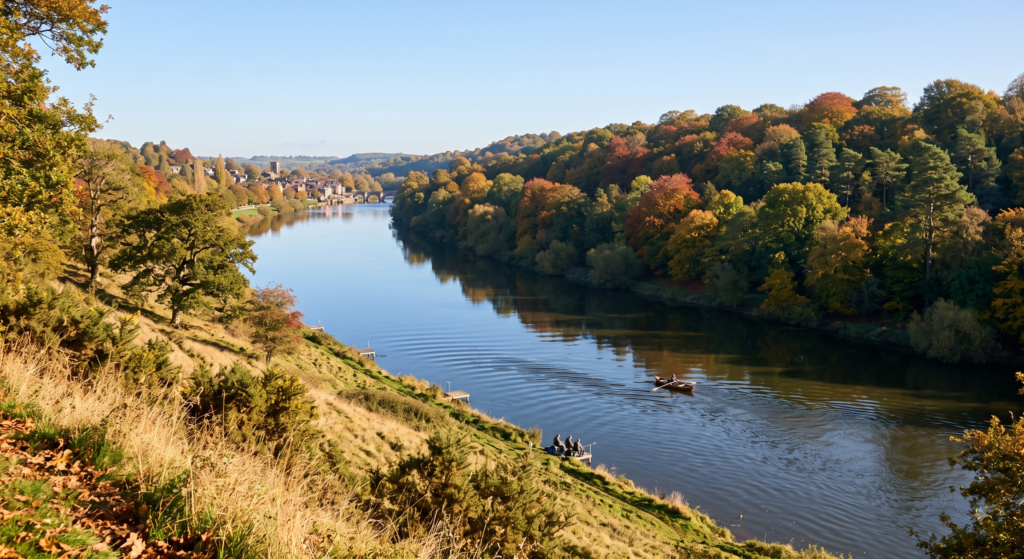
Overview
The Severn is a big, powerful river. In normal conditions it runs with a steady, fishable pace throughout the year, but it is also prone to flooding, particularly in winter, when it can rise 3-5 metres and become unfishable for days at a time. Visiting anglers should check river levels before travelling; the Environment Agency’s flood map and the Severn EA gauge network provide live level data.
Despite its size, the Severn is accessible. Angling clubs control significant stretches throughout the river and offer day ticket access or affordable membership. The Midlands Angling Alliance, Shrewsbury Anglers Association, Birmingham Anglers Association (BAA), and Tewkesbury Anglers Association are among the clubs covering different sections of the river.
Upper Severn (Wales to Shrewsbury)
The upper river from the Welsh hills down through Welshpool and Shrewsbury has a different character to the lower reaches. Here the river is narrower, faster, and clearer, running over gravel beds and through rocky channels. The fishing is for barbel and chub in the main current, with dace and grayling in the faster gravels.
Welshpool: The upper Severn in and around Welshpool produces chub and barbel from rocky runs and streamy glides. The Montgomery Angling Association controls significant stretches; day ticket access is available from local tackle shops.
Shrewsbury: The Shrewsbury area is one of the most popular urban fishing destinations on the Severn. The Shrewsbury and Atcham stretch holds barbel, chub, roach, and bream. Club access through Shrewsbury Anglers Association; the English Bridge to Welsh Bridge stretch is particularly popular.
Species in the upper river: Barbel, chub, dace, grayling (above Shrewsbury in the cleaner reaches), roach, pike, perch.
Middle Severn (Bridgnorth to Worcester)
The middle river is the stretch most associated with big Severn barbel. From Bridgnorth through Bewdley, Stourport, and down to Worcester, the Severn runs through mixed gravel and clay beds with long glides, deep bends, and barbel-holding features.
Bridgnorth: The Bridgnorth stretch has long been considered one of the finest barbel rivers in England. Club fishing through Wolverhampton and District Angling Association; some day ticket availability.
Bewdley and Stourport: A classic Severn barbel area with excellent access through several clubs including the Birmingham AA. Long glides, weir pools (Stourport weir is a significant winter barbel and chub location), and varied bank access.
Worcester: The river through Worcester holds barbel in the faster, shallower sections above the city and bream/roach on the slower town-centre stretch. Checkered access – some club water, some EA/free access. Worcester and District Angling Association has water in the area.
Species in the middle river: Barbel, chub, pike, perch, roach, bream, dace.
Lower Severn (Tewkesbury to the Severn Estuary)
Below Tewkesbury, the Severn changes character significantly. The river becomes much wider and slower, the water often coloured, and bream, roach, and pike become the dominant species. In the tidal section below Gloucester, the river is influenced by one of the highest tidal ranges in the world.
Tewkesbury: The confluence of the Avon and Severn at Tewkesbury is a major coarse fishing destination. The Ham is a well-known day ticket barbel and chub stretch; the Avon confluence draws fish from both rivers.
Gloucester: The Gloucester Canal and lower Severn around Gloucester holds pike, bream, and roach. Urban access near the docks; club water further downstream.
Species in the lower river: Pike, perch, bream, roach, zander (increasing), barbel (sporadic), chub.
Barbel Fishing on the Severn
Severn barbel are among the finest in England. The river’s mix of fast glides, gravel runs, and deeper bends provides classic barbel habitat, and the fish grow large – doubles (fish over 10lb) are a realistic target on prime stretches.
Key features to target:
– Long gravel runs with a steady pace
– Creases between fast and slower water
– Downstream face of boulders and rock features
– Weir pools in autumn and winter
– Deep water at inside bends
Tactics: Rolling meat (luncheon meat or Spam cubes, 15-20mm) is the traditional Severn barbel method, particularly in coloured autumn flood conditions. Pellet and boilie on a short link leger or in-line flat feeder is the modern standard approach for summer barbel. Freeline luncheon meat in low water conditions on a size 4-6 hook, with no other weight, produces barbel from shallow streamy runs where heavier rigs spook fish.
Timing: September to November produces the biggest Severn barbel. The first floods of autumn trigger feeding from large fish that have been relatively quiet through summer. Winter fishing in clear water after floods recede can also produce large barbel.
Chub Fishing on the Severn
Chub are the most reliable species on the Severn throughout the year, including winter. They occupy barbel swims in streamy water and hold up in deep inside bends and near bankside cover in cold weather.
Methods: Cheese paste is the classic Severn chub bait, particularly in winter. Luncheon meat works year-round. Bread flake on the float or legered is very effective in clear low water conditions. Large predator-pattern lures (jerkbaits, shads) can produce chub as well as pike and perch on the bigger lower river.
Pike Fishing on the Severn
The Severn holds good numbers of pike throughout its length, with the biggest fish tending to come from the slower lower reaches. Winter is the prime pike season, with flood conditions that push baitfish into slacks and eddies also concentrating pike.
Lure fishing: Drop shot rigs, shad lures, and jerkbaits work throughout the Severn. The varied pace of the river suits different lure presentations – fast spinners and heavier jigs in the main current, lighter shads and drop shot in the slacks.
Deadbaiting: A static mackerel or roach deadbait in a slack or deep pool through winter is the most consistent big pike method on the lower Severn.
Access and Permissions
The Severn is covered by multiple clubs along its entire length. The main options:
Birmingham Anglers Association (BAA): One of the largest angling associations in the UK, with significant stretches of the middle and lower Severn. Annual membership or day tickets.
Shrewsbury Anglers Association: Covers stretches through and around Shrewsbury.
Wolverhampton and District AA: Covers sections around Bridgnorth.
Tewkesbury Angling Association: Lower river access around Tewkesbury.
Environment Agency free fishing: Some short stretches are available under EA access provisions but this is limited on the Severn compared to some rivers. Always verify before fishing.
A current rod licence from the Environment Agency is required. The Severn is in England for most of its length but rises in Wales; check the appropriate licence for the exact stretch you are fishing.
Flood Conditions
Fishing the Severn in flood is a specific skill. When the river rises significantly:
– The main current becomes unfishable; fish move to the margins, to flooded fields, and to the slack water behind any available cover
– Target the edge of the flood where still water meets the main current
– Use heavier leads (3-4oz) to hold bottom in the slack marginal current
– Luncheon meat in a feeder or freelined is the flood Severn standard – it shows up in coloured water and the scent carries well
As the flood recedes, fish often return to the main river feeding strongly as oxygen levels recover and food is flushed downstream. The day after a flood drops back to fishable level can produce exceptional barbel sessions.
Frequently Asked Questions
What is the Severn famous for fishing?
The River Severn is famous primarily for barbel fishing, particularly on the middle river around Bewdley, Bridgnorth, and Stourport. It also has a strong reputation for chub year-round and big pike in the lower reaches. It is one of the most heavily fished rivers in England.
Is there day ticket fishing on the River Severn?
Yes. Multiple clubs along the Severn offer day tickets, including the Birmingham Anglers Association and several local clubs at Shrewsbury, Bridgnorth, Bewdley, and Tewkesbury. Check with local tackle shops in each town for current day ticket availability as options change by season.
What is the best time to fish the River Severn for barbel?
September to November is the prime Severn barbel period. Autumn floods trigger heavy feeding from large barbel, and the weir pools and streamy runs are at their most productive. Summer (June to August) produces steady barbel fishing in normal conditions.
Can you fish the River Severn during the close season?
The statutory coarse fish close season (15 March to 15 June) applies to the River Severn as a river. Fishing for coarse fish on the Severn is not permitted in this period. The river reopens on 16 June.
Are there any big fish records from the River Severn?
The Severn has produced barbel over 16lb on some stretches, and double-figure chub are occasionally reported. Pike into the twenties are caught regularly on the lower river. Individual club or fishery records may be held locally; the river is not a record-breaking water but is consistently productive for specimen fish.