The Great Ouse is one of the most diverse coarse fishing rivers in England. Rising in Northamptonshire near Brackley and flowing 143 miles northeast to the Wash at Kings Lynn, it passes through or near Bedford, St Ives, Ely, and Downham Market before becoming the tidal Bedford Ouse in its lower reaches.
The character of the river changes considerably from source to sea. The upper river above Bedford is a classic English meandering lowland river – willows, cattle drink, good winter roach and chub. Through Bedford and St Ives the river widens and deepens, producing specimen barbel, large bream, and excellent pike. Below Ely the river becomes broader, slower, and more fen-like, with bream shoals and zander entering the mix before the tidal influence takes over entirely.
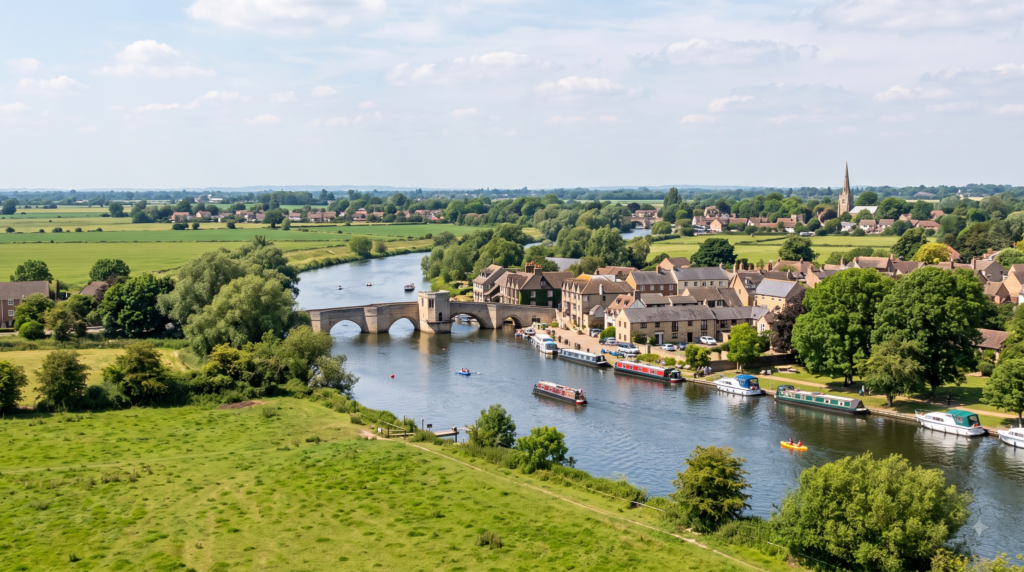
Upper Great Ouse: Northampton to Bedford
The river in this reach is narrower and faster than the navigable lower river. At Olney, Great Linford, and Newport Pagnell the river produces good roach, chub, dace, and perch on trotting and feeder tactics. Barbel are present in this upper reach and have been growing in numbers in recent decades.
Olney to Bedford: Club water dominates this stretch. The Bedford Angling Club controls significant lengths and offers membership to visiting anglers. The river here suits trotting with centrepin and hemp-and-tares for roach and dace. Chub hold in the willow bends and undercut banks. Pike to double figures in winter.
Key access points: Newport Pagnell – parking near the town bridge. Olney – club water accessed via membership. Check the Environment Agency rod licence website for any free fishing designations on this reach.
Middle Great Ouse: Bedford to Ely
This is the most heavily fished and most productive reach of the river. The river is navigable from Bedford upward and broadens considerably through this section. Pleasure boat traffic in summer can disturb fishing from June to August, particularly at weekends.
Bedford
The town stretch at Bedford is one of the most famous coarse fishing venues in England. The Embankment, from Fenlake to the town bridge, has produced exceptional weights of roach, bream, and perch over the years. The Bedford stretch is managed by the Ivel Fishing Association and Bedford Angling Club.
Species: roach (shoals of fish to 2lb+), bream (shoals to 8lb+), chub, dace, perch, pike, and resident barbel.
Best methods: long-range waggler for roach, feeder for bream, feeder or flowing hooklink for chub.
Ouse Valley Lakes and St Ives
The stretch between Bedford and St Ives is varied: slow river bends, deeper glides, and several notable bends where barbel hold. The Holywell-cum-Needingworth stretch has produced consistent barbel results.
St Ives: The river at St Ives and immediately upstream has become one of the most productive barbel reaches on the Great Ouse. The fish here run to double figures, with specimens over 12lb reported. Club water (St Ives Fish and Game Preservation Society, Ouse Angling Preservation Society) controls most of the quality stretches.
Barbel tactics at St Ives: feeder with hemp and pellet, or a simple running lead setup with a barbel hair rig. Evening into darkness sessions in autumn produce the best results.
Huntingdon: Both banks above and below Huntingdon produce bream, roach, and chub. The St Neots to Huntingdon corridor has club water throughout.
Earith and Over
Below Huntingdon, the river slows and widens through the flat Cambridgeshire Fens. At Earith, the Bedford Levels branch off and the character changes. The bream fishing here can be exceptional – large shoals of fish to 10lb+ move along this reach in summer.
The Ouse Washes (a managed floodplain between the Old and New Bedford Rivers) are a significant landscape feature in this area and, while primarily a wildlife reserve, the rivers that border them hold substantial coarse fish populations.
Lower Great Ouse: Ely to Kings Lynn
This reach is wide, deep, and strongly influenced by the tidal Wash in its lowest section. The fishing character shifts from typical English river fishing to something more like a fen drain – slow, coloured water, large bream, and the possibility of zander.
Ely and Littleport
The river at Ely offers access from the town quay and on club stretches either side of the town. Bream to 8lb+ are taken on feeder tactics with groundbait and worm. Roach to over 2lb are present on the cleaner stretches.
Denver Sluice: One of the most famous features on the lower Great Ouse, Denver Sluice controls water flow between the tidal river and the relief channels below. The area around Denver is a noted specimen bream venue, with fish to 13lb+ recorded. Zander are present and pike to 30lb+ have been taken from the lower river near this area.
Kings Lynn and the Tidal Section
Below Denver, the river becomes tidal. The tidal Ouse produces flounder and sea bass in the lower reaches, along with coarse species tolerant of brackish water. This is primarily a boat or sea fishing environment rather than traditional bank coarse fishing.
Species Guide for the Great Ouse
Barbel
The Great Ouse barbel population has expanded significantly since the 1990s. The river now produces double-figure fish reliably, particularly between St Ives and Bedford. Summer evenings on hemp and pellet, or autumn nights on boilies and pellet, are the most productive approaches. Best barbel reaches: St Ives to Huntingdon area.
Bream
The Great Ouse is a major English bream river. Shoals of fish to 8-12lb are present through the navigable middle and lower river. Feeder fishing with groundbait, sweetcorn, and worm at range is the standard approach. Evening tidal rhythm on the lower river affects feeding times significantly.
Roach
Good roach to 2lb+ are present throughout the middle river. The Bedford Embankment stretch has historically produced excellent winter roach weights. Trotting with a centrepin and hemp, casters, and maggot is the preferred technique.
Pike
The Great Ouse is a productive pike river, with doubles common in winter. The lower river produces larger fish, with 20lb+ pike a realistic target on the wider reaches below Ely. Deadbaiting and lure fishing are both effective.
Zander
Zander are established in the lower Great Ouse and associated fen drains. Originally introduced to the Relief Channel at Denver in the 1960s, they have spread throughout the Ouse catchment. Fish to over 10lb are present. Zander are most active after dark and in coloured water, responding to small deadbaits and soft plastic lures.
Chub
Chub are present throughout the upper and middle river, particularly associated with willow bends, bridge arches, and marginal cover. Trotting a stick float with hemp and tares, or a large bread crust cast under overhanging trees, are classic approaches.
Fishing Clubs and Access
The Great Ouse is predominantly club water. Key organisations:
- Ivel Fishing Association – controls significant Bedford and mid-river stretches
- Bedford Angling Club – town and out-of-town stretches
- Ouse Angling Preservation Society – stretches through the middle river
- St Ives Fish and Game Preservation Society – St Ives and upstream
- Cambs Specimen Group – members-only access to certain stretches
Free fishing is limited on this river. The Environment Agency does maintain some free public bank access at designated stretches, but the quality club water requires membership or day tickets where available. Check with local tackle shops in Bedford, St Ives, or Huntingdon for current access arrangements and day-ticket availability.
Licences and Regulations
An EA rod licence is required for all fishing on the Great Ouse in England. The river is subject to the coarse fish close season on non-tidal sections (15 March to 15 June). The tidal section below Denver Sluice has no statutory close season for coarse fish. Barbless hooks are not universally required but are good practice and required on some club stretches.
Check the Environment Agency for any byelaws specific to the Great Ouse system, particularly around navigable sections where additional conditions may apply.
Best Times on the Great Ouse
Summer (June-September): Barbel are at peak activity. Evening and after-dark sessions on the middle river produce best results. Bream are catchable through the summer months.
Autumn (October-November): Continued barbel activity, excellent chub fishing, pike moving into the river.
Winter (December-February): Pike fishing at its best, particularly on the lower river. Roach and bream respond to mild spells on the middle river.
Spring (March-May): Close season on rivers (15 March to 15 June) means no coarse fishing on non-tidal sections. Pre-close season (January-14 March) can produce excellent quality roach and chub on clear, cold water.
Frequently Asked Questions
Where is the best stretch of the Great Ouse for barbel?
The stretch between St Ives and Bedford is the most consistently productive for barbel on the Great Ouse. The Holywell-cum-Needingworth and Houghton Meadows sections have produced specimens over 12lb. Club membership is required for most quality stretches – the St Ives Fish and Game Preservation Society and Ouse Angling Preservation Society both cover this reach.
Are there zander in the Great Ouse?
Yes. Zander are established in the lower Great Ouse and the connected fen drains below Denver Sluice. They were introduced to the Relief Channel in the 1960s and have spread through the Ouse system. Fish over 10lb are present. Note that zander are an alien invasive species in England – check EA regulations regarding keepnets, return, and reporting of captures.
Can I fish the Great Ouse without a club membership?
Some day tickets are available on the Great Ouse, and there is limited free public bank access at certain points. However, the best coarse fishing stretches are controlled by clubs requiring annual membership. Local tackle shops in Bedford, St Ives, and Huntingdon are the best source of current access information and day ticket details.
What is the close season on the Great Ouse?
The coarse fish close season applies on non-tidal sections: 15 March to 15 June. The tidal section below Denver Sluice has no statutory close season. Pike and other predator fishing is subject to the same close season rules. Always check the specific section you intend to fish.
Is there free fishing on the Great Ouse?
The Environment Agency maintains some free public access stretches, and in certain towns (including parts of Bedford) there is public bank access. The Great Ouse is not a river with extensive free fishing – the majority of quality bank is club water. A good local tackle shop will know the current position better than any online source.