The Bristol Avon is distinct from the more famous Hampshire Avon. It rises near Tetbury in Gloucestershire and flows west and north through Bradford on Avon, Bath, and Keynsham before entering the Severn Estuary at Avonmouth, a journey of around 75 miles. It is a very different river from its Hampshire counterpart – less pristine chalk stream, more a working agricultural and urban river that still manages to produce excellent fishing when treated right.
The Bristol Avon’s character is varied. The upper reaches (Chippenham to Bradford on Avon) are relatively clean and clear with a gravel bed, supporting a good chub and dace population. The middle section through Bath is tidal below the weirs and increasingly influenced by the estuary. The non-tidal section from Chippenham downstream to Keynsham is where most productive coarse fishing happens.
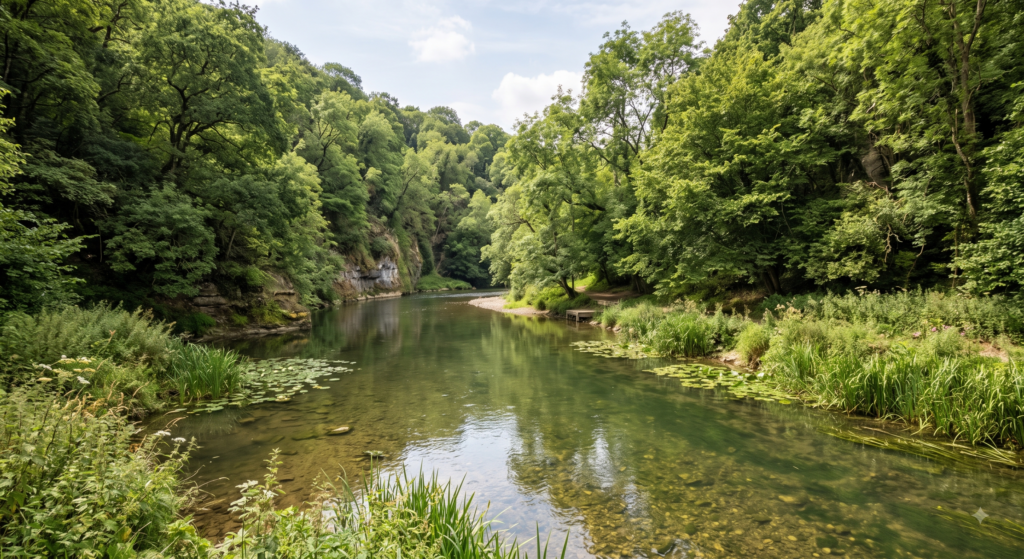
The River System
Upper Avon (Tetbury to Chippenham): Smaller, shallower, with excellent dace and chub fishing. Scenic, relatively lightly pressured.
Middle Avon (Chippenham to Bradford on Avon): This is often considered the best section. The river deepens and widens, with a good mix of fast riffles and deeper pools. Barbel are present in this section, along with chub, dace, roach, perch, and pike. The stretch around Lacock (NT property) is notable and well-regarded for chub and barbel.
Bath section (Bradford on Avon to Bath): The Avon through Bath is scenic and holds reasonable fishing, including some notable pike. The weirs at Bathampton, Newbridge, and Twerton create classic river features (deep slow tail of each weir pool, faster water above).
Below Bath (Saltford to Keynsham): This section passes through the rural corridor south of Bristol. Known for pike and bream, with barbel present in some areas. The Bitton and Saltford stretches hold fish.
Access and Permits
Much of the Bristol Avon fishing is controlled by the Bristol, West of England and District Anglers’ Association (BWEDAA), one of the region’s primary angling clubs. They control extensive stretches of the middle and lower Avon. Day tickets are available for some stretches; full membership gives the best access.
The Avon Angling Club and various smaller clubs also control stretches. Local tackle shops in Bath and Chippenham are the best source of current access and permit information.
The Environment Agency rod licence is required for all fishing.
Species
Chub
The Bristol Avon’s most reliable target. Chub to 5lb+ are present throughout the middle and upper river. They respond to breadflake in winter, meat in summer and autumn, and luncheon meat or boilies fished on the bottom in deeper pools.
The most productive chub swims are undercut clay or mud banks with overhanging vegetation, the slack water behind bridge piers, and the inside bend of deep pools. Free-lining a large piece of breadflake into a deep slack is a classic Bristol Avon chub approach in winter.
Barbel
Bristol Avon barbel have attracted serious attention in recent years. Barbel to double figures have been recorded, and fish in the 8-10lb range are realistic targets on productive stretches.
The section around Lacock and the Bradford on Avon reaches are the primary barbel sections. Halibut pellets on a hair rig over a bed of hemp is the most consistent approach. The barbel here tend to be in the shallower, faster-water sections – the tail of weir pools and streamy gravel runs.
Important: The Bristol Avon is subject to EA barbel-specific guidance at times. Some areas have historically been placed on catch-and-release recommendations for barbel due to population pressures and water quality. Check current EA and club guidance before targeting barbel.
Pike
Winter pike fishing on the Bristol Avon can produce fish to 20lb+. The deeper sections below Bath, particularly the Keynsham and Bitton stretches, hold the best pike. Deadbaiting with roach or smelt on a running ledger is the standard bank approach.
Roach
Roach are present throughout the river. The upper Avon around Chippenham produces roach on trotted maggot and caster. In the middle section, roach tend to be mixed with dace in the faster runs. Winter float fishing on a well-fed swim is the standard approach.
Dace
Dace are present in the upper reaches and in the fast, shallow runs of the middle section. They respond to the same trotting approach used for river dace nationally – stick float with maggot on a size 18-20 hook, regular loose feeding of maggots upstream.
Bream
The lower Avon between Keynsham and Avonmouth holds bream shoals, though this section is increasingly affected by tidal influence and water quality varies. Groundbait and feeder approaches in the calmer sections downstream of Keynsham produce bream.
Seasonal Notes
| Season | Best Approach |
|---|---|
| Summer (June-Sept) | Chub on meat and boilies; barbel on pellets in evening; dace on trotted maggot |
| Autumn (Oct-Nov) | Chub and barbel both active; pike coming on; roach building in deeper pools |
| Winter (Dec-Feb) | Chub on breadflake; pike on deadbait; roach and dace in riffles; barbel in deeper pools during spate |
| Spring (Mar-May) | River close season applies from March 15 – no coarse fishing until June 16 |
Water Conditions
The Bristol Avon rises and colours quickly after rain due to agricultural catchment soils. After heavy rain, the river can be chocolate-brown and high for several days. Fishing a rising Bristol Avon is unproductive; the best fishing is typically as the river drops and begins to clear, often 24-48 hours after a flood peak.
In hot summers the river can drop to very low, clear levels. Chub and barbel in clear, low water are extremely wary – approach carefully, fish lighter tackle, and focus on first and last light.
Frequently Asked Questions
How does the Bristol Avon compare to the Hampshire Avon for fishing?
They are very different rivers. The Hampshire Avon is a chalk stream with some of the best roach and barbel fishing in England, heavily managed and largely accessible only through expensive club membership. The Bristol Avon is a more accessible, less pristine river that still produces good chub and barbel fishing at a much lower access cost, but without the Hampshire Avon’s exceptional specimen potential.
Where is the best section of the Bristol Avon for barbel?
The middle section from Lacock to Bradford on Avon is most consistently associated with Bristol Avon barbel. The Lacock stretch in particular has a good reputation. Contact BWEDAA or local tackle shops for current access and barbel hotspot information – the best swims are not static and change as the river adjusts each season.
Is the Bristol Avon good for beginners?
Yes, for coarse fishing generally. The upper and middle sections are accessible, the river has a variety of species including easy-to-catch dace and chub, and club membership provides good value access. Beginners should start with float trotting for dace and roach before progressing to chub and barbel fishing.
When does the Bristol Avon river close season apply?
The standard England and Wales river close season applies: no coarse fishing from March 15 to June 15 inclusive. This applies across the Bristol Avon’s non-tidal length. Always confirm current byelaws with the EA, as tidal sections may be treated differently.
What are the best clubs for Bristol Avon fishing access?
The Bristol, West of England and District Anglers’ Association (BWEDAA) is the primary club for the Bristol Avon. They control extensive stretches and offer both day ticket and season membership options. Local tackle shops in Bath and Chippenham can provide current membership details and any day ticket availability.