On braid, the Palomar knot tests at around 124% of the line’s rating. The Improved Clinch, the knot most anglers reach for by habit, manages about 51.6% on the same line (Berkley machine testing, via KnotsForFishing.com). If you fish braid and still tie a Clinch, switching to the Palomar is the single biggest knot upgrade you can make.
The Palomar is a simple, doubled-loop terminal knot. It joins your line to a hook, swivel, lure clip or jighead, and it does so with very few steps. That makes it a natural fit for lure and pike anglers, carp anglers connecting to hardware, and beginners who want one reliable knot to lean on.
This guide takes you through the full step-by-step, the Double Palomar for braid, exactly when the knot is the wrong choice, and the mistakes that cause silent failures on the bank. It all starts with the line in your hand.
What You Need and When It Works Best
The Palomar connects your line to hooks, swivels, snap links and lure clips, and jigheads. Anything with a closed eye that the doubled loop can pass over is fair game.
Strength varies by line type. On braid it tests at around 124.0%, on mono around 115.8%, and on fluorocarbon around 100.7%, averaging 113.5% across the three. Figures above 100% are normal, not a mistake: quality lines routinely exceed their stated rating, so when the knot is tied correctly the line breaks before the knot does.
Braid is the standout use case. Slippery braided line defeats a lot of knots, and the Palomar grips it better than most simple ties.
Fluorocarbon needs more care. It is stiffer and more heat-sensitive than mono, so wetting the knot matters more here. That 100.7% is still a strong result, but fluoro punishes dry friction and any kink you leave in the line.
Two places it struggles: very small hook eyes and oversized trebles or bulky lures. Both are covered in the “when to use” section below.
For gear, you need a 6 to 8 inch working length of line and a bit of saliva or water. Go longer on the line for large lures.
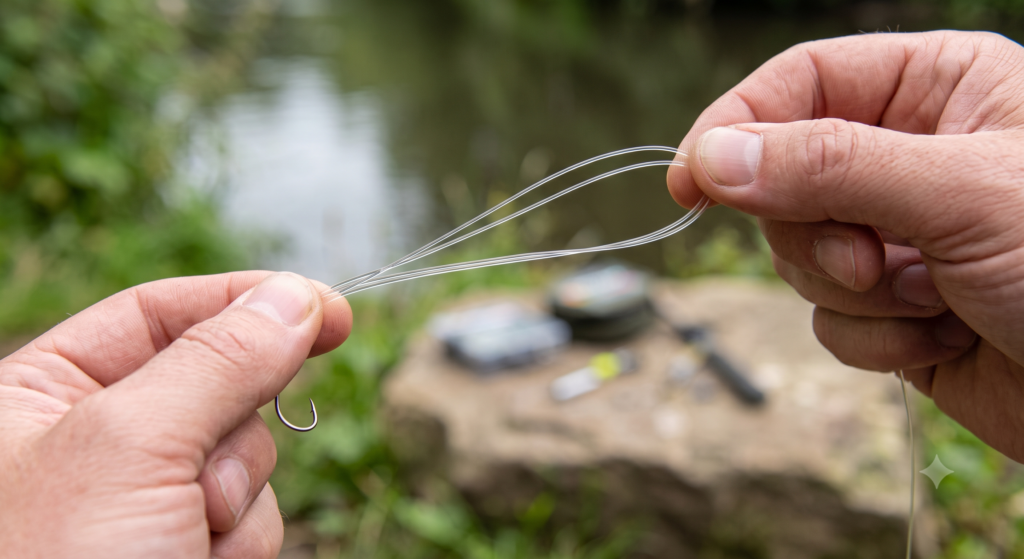
Step 1: Form the Bight
Double 6 to 8 inches of line back on itself to form a bight, a U-shaped loop. The whole hook has to pass through this loop later, so length matters. Go longer for big lures or large hooks.
Keep the two strands sitting neatly together, not twisted around each other. If you are in doubt, use more line rather than less. You can always trim the excess at the end, but you cannot add length back once the knot is seated.
Step 2: Thread the Eye
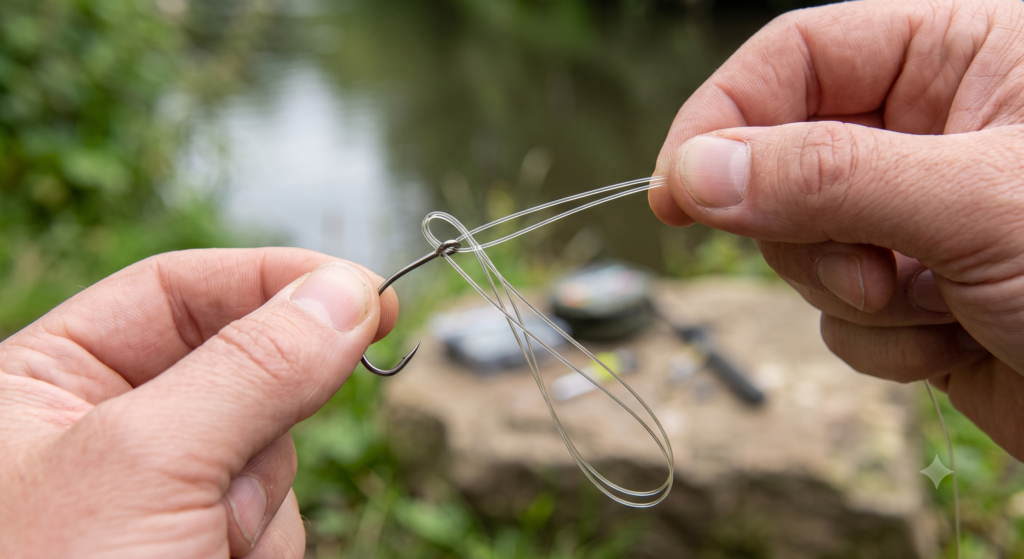
Pass the doubled loop through the hook eye, front to back. Pull 3 to 4 inches of the loop through so you have room to work.
Feeding front to back keeps the finished knot seating tidily against the eye. On small eyes the doubled line can be bulky, so feed it through slowly rather than forcing it. Keep the standing line and tag end roughly parallel as they enter the eye, which stops them tangling on the next step.
Step 3: Tie a Loose Overhand Knot
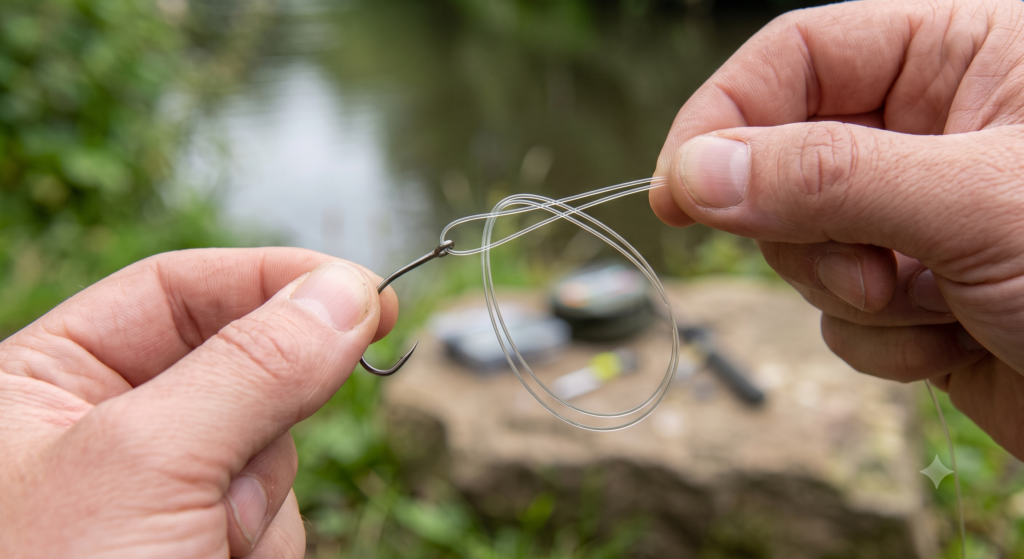
Tie a simple overhand knot with the doubled loop, but keep it large and loose. Do not tighten it yet. The hook still has to pass through this open loop, so leave it generous.
This is the step that makes or breaks the knot. The two strands must run parallel through the overhand. If they cross over each other, the knot will fail under load even though it looks perfectly fine from the outside. Crossed lines are the number-one cause of Palomar break-offs.
You can eyeball it. The two lines should lie side by side like train tracks, not scissor over one another. This is the step people rush, and slowing down here is what separates a knot testing over 110% from one that lets you down on the strike.
Step 4: Pass the Loop Over the Hook
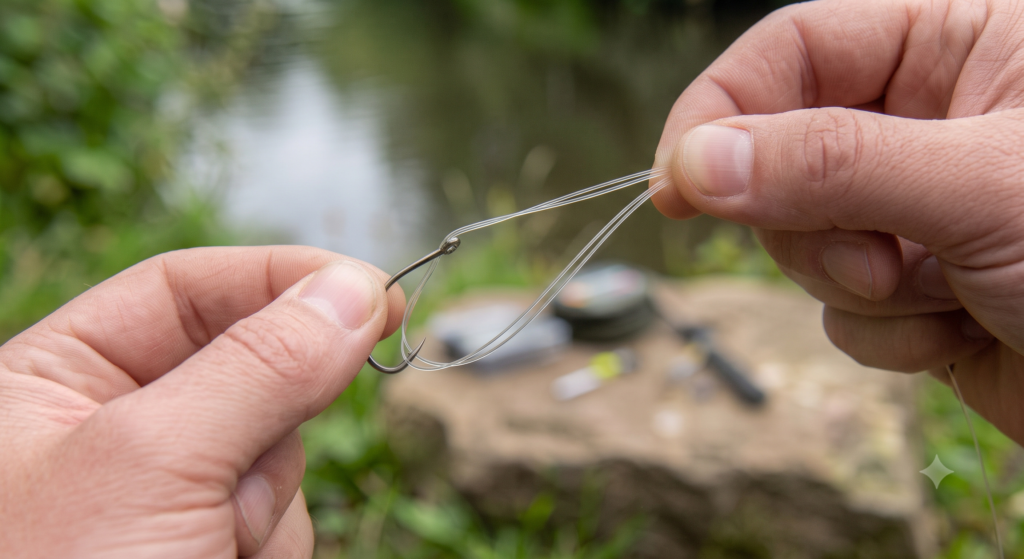
Pass the entire hook through the open loop. This feels odd the first time you do it, because the loop travels right over the point, bend and barb of the hook.
Aim for the loop to come to rest below the eye, around the shank. Do not cinch the overhand down before the loop has fully cleared the hook, or you will trap it half-formed. On trebles and big lures this is the step where the knot can physically fail to clear the hardware, which is exactly why some setups need a different knot (see below).
Step 5: Wet, Seat and Trim
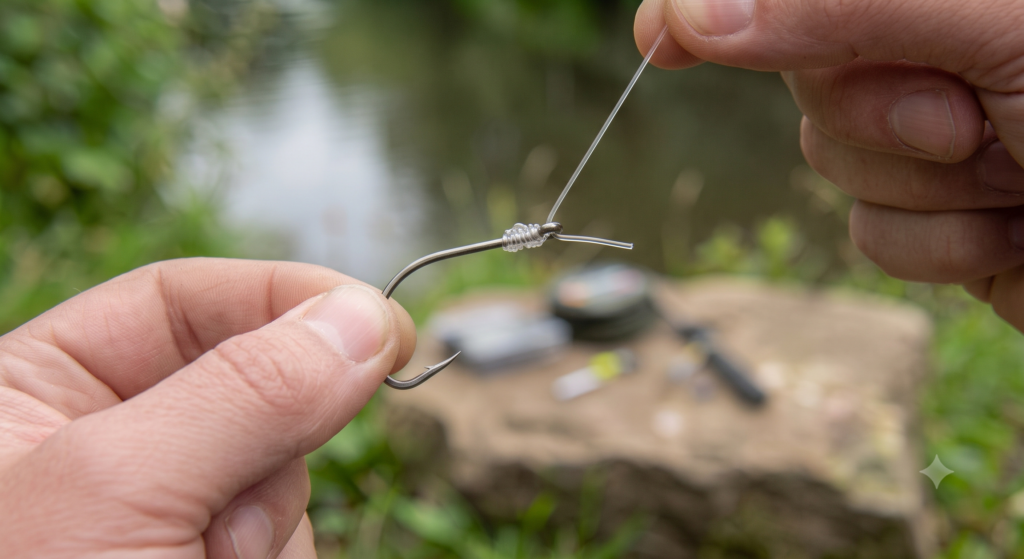
Wet the knot with saliva or water. Hold the standing line and tag end together and pull slowly until the knot cinches down neatly below the eye.
Wetting is not optional. Dry friction generates heat as the knot seats, and that heat degrades the line. Fluorocarbon suffers most of all. Pull both strands at the same time rather than one then the other, so the knot seats evenly.
Trim the tag end to 3 to 5mm. Cut it flush and it can slip; leave it long and it catches debris and weed. Before you cast, give the seated knot a firm, steady pull to confirm it has bedded in properly.
]
The Double Palomar: The Braid Upgrade
The Double Palomar is a small variation on the standard knot, aimed mainly at braid. The extra pass through the eye gives more contact and a better grip on slippery braided line.
- Pass the line through the hook eye once as a single strand, pulling 10 to 12 inches through.
- Pass the line back through the eye a second time in the same direction. This creates a doubled loop sitting below the eye.
- Tie a loose overhand with the doubled loop, keeping the two strands parallel exactly as you would on the standard knot.
- Pass the hook through the loop.
- Wet the knot and tighten it down just as you would a standard Palomar.
The payoff is two wraps through the eye instead of one, which means more surface contact and less chance of braid slipping under load. Be honest about the trade-off, though. Against a double Grinner on braid the strength gap narrows to almost nothing, so pick between them on tying preference and the finished profile you want at the eye.
When to Use the Palomar – and When Not To
Across UK fishing, it earns its place in several disciplines. In lure and pike fishing it is the standard tie for snap links, lure clips, swivels and jigheads, and the Double Palomar suits braid-to-jighead. In carp fishing, use it for swivels, lead clips and other hardware, but not for the hook-to-hooklink connection: the hair is formed with a Knotless Knot, and the Palomar simply cannot do that job. Match and coarse anglers often prefer the Grinner for its smaller profile on fine-wire small hooks. For sea lure fishing it works fine, mono or braid, to a lure clip or hook.
Knowing when to leave it in the box matters just as much, and it is the part most guides skip.
Skip the Palomar for large treble hooks (size 2/0 and above, or wide-span trebles): the loop cannot clear all three points. Skip it for big bulky pike lures such as wide tandem-blade spinnerbaits, where the lure body will not pass through the loop at all. For wire traces, use a haywire twist or crimps instead. For joining line to line, use an FG knot or a Grinner-to-Grinner. And for very small hook eyes, such as some fine-wire match hooks, the doubled line is simply too bulky and the Grinner threads more cleanly.
For a quick head-to-head, Palomar and Grinner strength sits within 1 to 2% of each other across every line type. Choose on simplicity, where the Palomar wins, or on a smaller finished profile, where the Grinner does.
Common Palomar Knot Mistakes
A correctly tied Palomar tests above the line’s rated breaking strain. These five mistakes are what stop that happening, ranked by how often they catch anglers out.
- Crossing the lines during the overhand. This is the number-one cause of failure. The knot looks fine from the outside but comes apart under load. Fix: keep the two strands parallel, like train tracks.
- Cinching the overhand before the loop clears the hook. The knot cannot seat correctly if the loop is trapped half-formed. Fix: pass the hook fully through the loop before you tighten anything.
- Not wetting before tightening. Dry friction heat degrades the line as the knot seats, and it hits fluorocarbon hardest. Fix: always wet the knot with saliva or water first.
- Creasing or kinking the line at the eye. A crease becomes a permanent weak point that fails well below the line’s rating. Fix: seat the knot slowly and evenly so nothing folds sharply.
- Bight too short. If the loop is too small the hook will not pass cleanly, which forces you into crossing or creasing the line. Fix: start with 6 to 8 inches, and more for big hooks or lures.
A Palomar that tests over 110% and one that breaks at the knot are usually separated by just one of these five things.
Palomar Knot FAQs
How strong is a Palomar knot?
It averages around 113.5% of the line’s rating across all line types: 124% on braid, 115.8% on mono, and 100.7% on fluorocarbon. Values over 100% are normal, because quality lines routinely exceed their stated test and the line breaks before a well-tied knot does.
Is the Palomar knot good for braid?
Yes, it is one of the best simple knots for braid. Use the Double Palomar when you want even more grip on slippery braided line.
What is the Double Palomar knot for?
Braid connections, mainly. Two passes through the hook eye increase the contact surface, which reduces the chance of braid slipping under load.
When should you use a Palomar knot?
For hooks, swivels, lure clips and jigheads, across lure fishing, pike, carp hardware and sea fishing. Anywhere you are tying line to a closed eye that the loop can clear.
When should you NOT use a Palomar knot?
Large treble hooks, bulky pike lures, wire traces, line-to-line joins, and very small hook eyes where the doubled line will not thread cleanly. Each of those needs a different knot or connection.
Palomar vs Grinner – which is stronger?
They are near identical. Standardised testing puts them within 1 to 2% of each other across all line types. The Palomar is simpler to tie; the Grinner has a smaller finished profile.
Why does my Palomar knot keep breaking?
Almost always crossed lines in the overhand step, or not wetting before tightening. Both cause the knot to fail under load even when it looks correct from the outside.
Do you need to wet a Palomar knot before tightening?
Yes. Dry friction generates heat that weakens the line as the knot seats, and fluorocarbon is the most vulnerable of all to it.
Can I use a Palomar knot for a carp hair rig?
No. The Palomar cannot form a hair. Use the Knotless Knot for any hair rig application in carp fishing.